• Skip to primary navigation
  • Skip to main content
Reef Catchments Three Colour PMS
  • About
    • Annual reports
    • CEO’s Message
    • Board members
    • Our team
    • Careers
    • Partners
    • Queensland NRM Network
    • Strategic plan
    • Become a member
    • Update your contact details
  • Projects
    • Sustainable Agriculture
    • Waterways
    • Biodiversity
    • Great Barrier Reef
  • NRM Plan
    • NRM Plan 2014-2024
    • NRM region map
    • NRM Plan supporting documents
  • News
    • Articles
    • Newsletters
    • Media releases
    • Citizen Science Calendar
  • Events
  • Resources
    • Species, ecosystems & pests
  • Get involved
  • Careers
  • Contact us
×
  • About
    • Annual reports
    • CEO’s Message
    • Board members
    • Our team
    • Careers
    • Partners
    • Queensland NRM Network
    • Strategic plan
    • Become a member
    • Update your contact details
  • Projects
    • Sustainable Agriculture
    • Waterways
    • Biodiversity
    • Great Barrier Reef
  • NRM Plan
    • NRM Plan 2014-2024
    • NRM region map
    • NRM Plan supporting documents
  • News
    • Articles
    • Newsletters
    • Media releases
    • Citizen Science Calendar
  • Events
  • Resources
    • Species, ecosystems & pests
  • Get involved
  • Careers
  • Contact us
Hide Search

Archives for October 2025

Annual Report RCL 2024 – 2025

jamie · Oct 29, 2025 · Leave a Comment

Reef Catchments Annual Report for the 2024-2025 Financial Year.

This year marks a new chapter for Reef Catchments. With over 22 years of experience in Natural Resource Management, our team continues to grow and evolve.

In this report, you’ll find highlights from across the region – from new projects to future-focused planning. Hear from our Chair and CEO, explore project stories, and meet the people behind the work.

We’re proud to be turning knowledge into action and shaping the future of NRM in our region.

With thanks to our funding providers, stakeholders and local community.

View annual report

From the mountains to the sea – Resilient ecosystems, engaged community.

Reef Catchments is your Natural Resource Management (NRM) group for the Mackay Whitsunday Isaac region.
Reef Catchments logo.

Seaforth Locals Step Up to Restore Vital Seagrass Meadows

jamie · Oct 28, 2025 · Leave a Comment

At low tide on the Seaforth coast, volunteers gathered with buckets, boots, and a shared ambition to restore the seagrass meadows that support the health of the Great Barrier Reef. Lead by Reef Catchments in partnership with Central Queensland University and OzFish Unlimited, the two successful volunteer events at Seaforth marked a major milestone in the (Sea)Grassroots Community Restoration Project; a three-year initiative aimed at improving the health and resilience of seagrass meadows in the Great Barrier Reef.

Seagrass meadows are powerful ecosystems; the unsung heroes of the Great Barrier Reef. They stabilise sediment, filter coastal waters, store carbon, and provide food and shelter for turtles, dugongs and many species of juvenile fish. Unfortunately, seagrass meadows are under pressure from a changing climate, poor water quality and coastal development. Restoration of degraded meadows is essential, and community involvement is key.

Photo courtesy of Ozfish Unlimited. Pictured (left to right): Local volunteers, Dr Geoff Collins – OzFish Unlimited, Bronwyn Tonga – Yuwi Ranger, Shawn Morris – Yuwi Ranger, Alexandra Williams – Reef Catchments Great Barrier Reef Project Officer.

Seaforth volunteers worked alongside marine scientists and Rangers from the Yuwi Aboriginal Corporation to collect seagrass flowers and cores of a key local seagrass species, Zostera muelleri. Zostera, also known as “Eelgrass,” plays a critical role in reef resilience yet remains vulnerable to various pressures.

Alexandra Williams, Reef Catchments Project Officer, explained the importance of the work:

“Every seagrass flower and core collected aims to bolster the effectiveness of future restoration efforts. This is real science, which the community is a significant part of. It’s great to see the Seaforth community show such a keen interest into how they can help take care of these critical ecosystems.”

The Yuwi Rangers joined the events, bringing cultural knowledge and deep connection to Country. Yuwi Ranger Bron Tonga shared:

“Seagrass is important to our people for physical, spiritual, and cultural reasons. It provides food for the Turtle and Dugongs and is integral to our identity and connection to Country. The Seagrass meadows are vital for the ecosystem’s directly supporting other marine animals. It’s also about the understanding of seasons and cycles to monitor and care for sea meadows.”

This shared respect for seagrass was echoed by Dr Geoff Collins from OzFish Unlimited, who emphasised its role in supporting fish populations and recreational fishing:

“These seagrass meadows play a vital role in supporting the life cycle of the fish we all like to catch. If the seagrass meadows suffer, that has a direct impact on recreational fishing. That’s why volunteer events like these are so important – they give the local community a real, hands-on opportunity to take care of fish habitat.”

Seagrass restoration is local action with global impact. These meadows strengthen the reef’s ability to recover from severe weather, support thriving fish populations and keep coastal waters rich with life. For anyone who values clean oceans, healthy marine life and resilient reef systems, this is where meaningful change begins – on the shoreline, with your hands in the mud.

To learn more or register for future events, visit www.reefcatchments.com/events.

This project received grant funding from the Australian Government’s Protecting the Great Barrier Reef – Community Stewardship Program – an Australian Government initiative and delivered by Reef Catchments, in partnership with Central Queensland University and OzFish Unlimited.

Strategic Streambank Restoration: Building Resilience Across the Mackay Whitsunday Isaac Region

jamie · Oct 21, 2025 · Leave a Comment

Real change happens when projects are guided by data, scaled to the landscape, and delivered with the community at heart. The work in the Mackay Whitsunday Isaac (MWI) region focuses on restoring streambanks and river systems, improving water quality, and building resilience in the landscapes that flow to the Great Barrier Reef.

A Landscape-Scale Approach 

The MWI region is made up of small catchments each flowing into the Great Barrier Reef. To manage these systems, Reef Catchments adopt a whole-of-system approach, integrating science, planning, and on-the-ground action to achieve lasting ecological outcomes. 

Through regional streambank and geomorphological studies, we identify erosion risks, system stability, and restoration opportunities. This information helps us design projects that align with funder priorities, while continuing to drive our long-term vision for healthier waterways, stronger ecosystems, and resilient communities. 

From Data to Action 

Over the past decade, a suite of assessments, including stream type analysis, reach summaries, erosion prioritisation studies, and hot spot mapping, has guided our work. These studies not only highlight where interventions are needed but also ensure investments are targeted, efficient, and backed by evidence. By layering this knowledge and consistently applying it to funding applications, Reef Catchments has been able to scale up restoration efforts across the region. Projects such as the Landscape Repair Program continue to build on these foundations, enabling our largest restoration initiatives to date. 

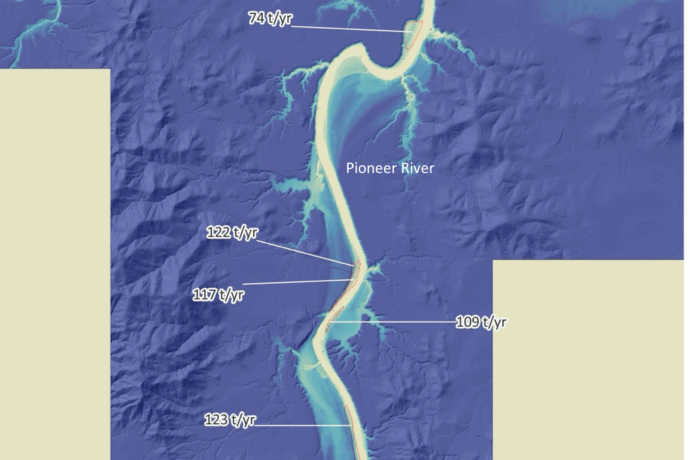
Image 1: Reach summary DEM of difference (DEMoD) of the Pioneer River
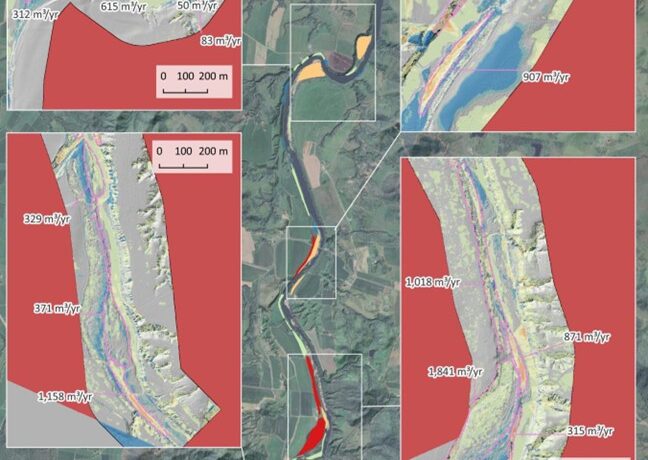
Image 2: Identified hotspot erosion for the Pioneer River reach


Highlight Projects and Achievements 

With support from government funding and partnerships, Reef Catchments has delivered multiple large-scale projects that are transforming riparian landscapes. A few standouts include: 

  • Reef Trust 4 – 37 project sites, 70,000+ trees planted, 25 ha of riparian corridors restored, and more than 45 ha of land protected by fencing. 
  • Reef Trust 7 – Protected 5.84 km of streambank, revegetated 2.21 ha, engaged over 90 landholders, and saved more than 2,800 tonnes of fine sediment each year. 
  • Monsoon Trough Recovery (Stages 1 & 2) – Together, these projects established over 12 engineered sites and planted more than 26,000 trees, reducing more than 10,000 tonnes of fine sediment annually. 
  • Reef Assist 2.0 – Engineered streambank and gully works, with 4,500 local native plants added, cutting sediment loads by over 1,000 tonnes per year. 
  • Preparing Australian Communities – Nature-Based Solutions – Engaged 144 landholders, installed 229 km of fencing, protected 152 km of streambank, and improved over 450 ha of riparian land. 

Outcomes 

Thanks to this collective effort, the region has already achieved: 

  • ~25,000 tonnes per year of fine sediment reduction at the coast. 
  • 125,000+ native riparian plants established. 
  • Over 230 landholders and properties engaged in sustainable land management. 

These achievements not only improve local ecosystems but also safeguard the Great Barrier Reef by reducing sediment and nutrient runoff. 

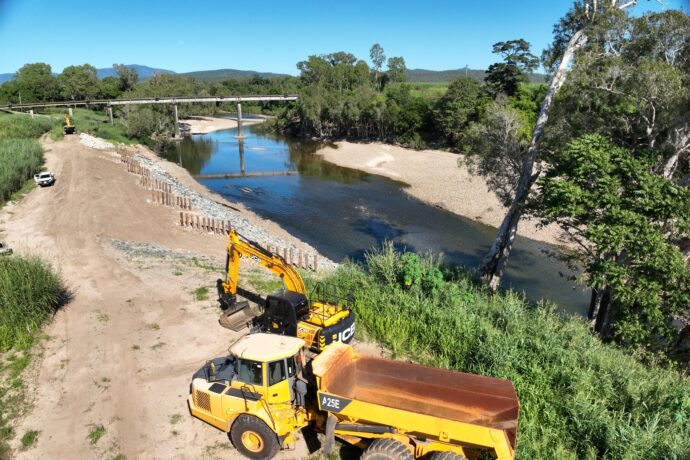
Image 3: Construction of an O’Connell streambank restoration project.

Looking Ahead 

Our commitment is long-term. By combining local knowledge, stewardship, and science-backed interventions, Reef Catchments continues to drive meaningful landscape change. These projects are building resilience, not only for our waterways and catchments but also for the communities and industries that depend on them. 


The Crust Conundrum: How Sandwich Edges Became a Waste Problem and What We Can Do About It

jamie · Oct 9, 2025 · Leave a Comment

It started with a simple question: What’s really going into our school bins?

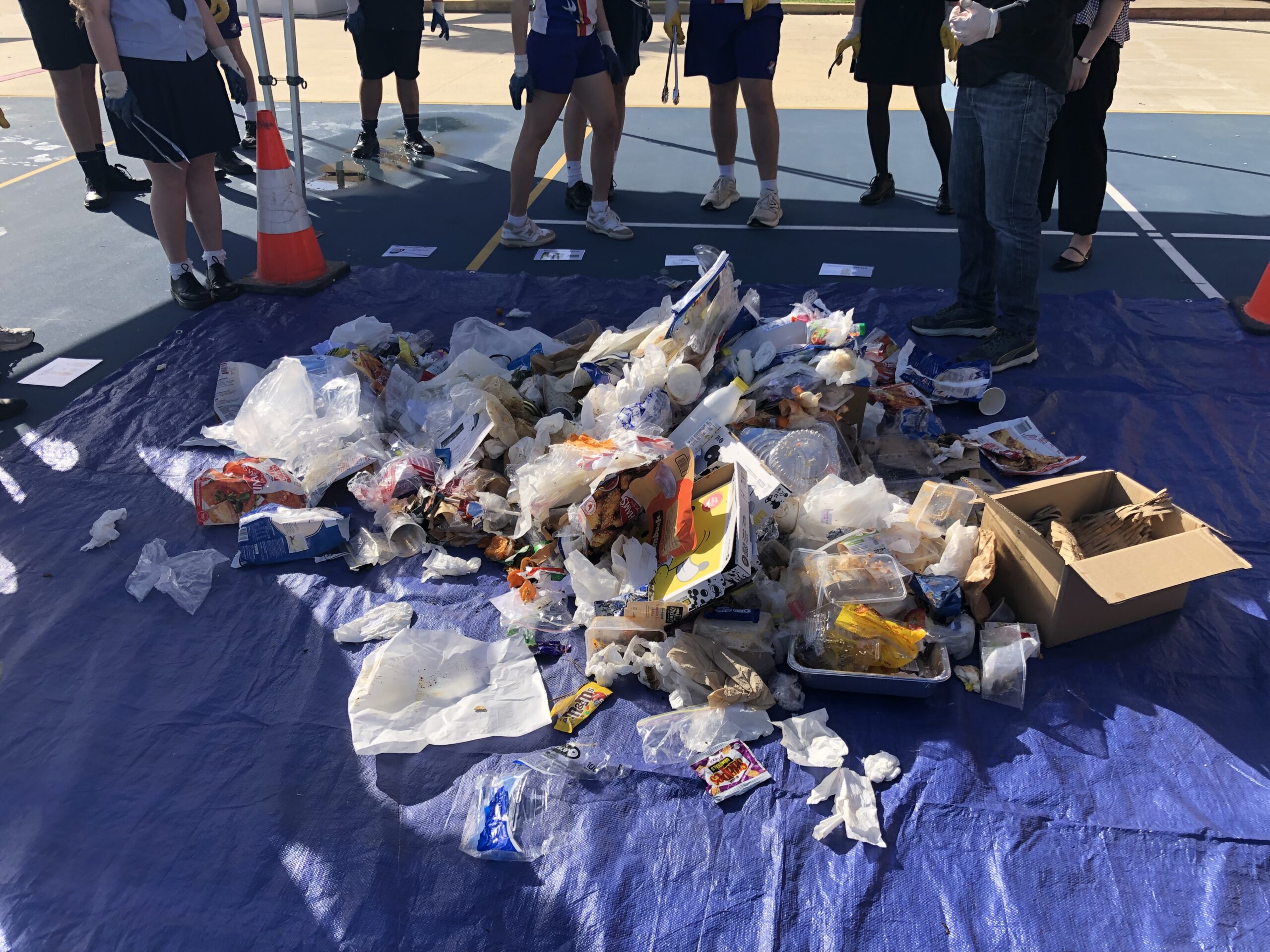
As part of the Mackay Whitsunday Isaac School Waste Minimisation Project, Reef Catchments conducted rubbish audits at  schools across the region. We expected to find the normal culprits; plastic food wrappers, juice boxes, maybe the odd broken pencil. But one item kept showing up again and again – uneaten sandwich crusts.

Sandwich crusts are non-compostable, so when they go uneaten, they end up in landfill, contributing towards food waste and greenhouse gas emissions. The answer to preventing this food waste is simple – eat your crusts!

Crusts. The humble edge of the sandwich. Not spoiled, not inedible, but somehow always left behind. And while it might seem like a small thing, those crusts told a bigger story about food waste, habits, and how we can help our kids make more sustainable choices.

If your child’s lunchbox often comes home with crusts untouched, you’re not alone. Kids tend to reject crusts because they’re chewier, darker, and look different from the soft middle. Over time, “I don’t eat crusts” can become a habit, especially if crusts are routinely cut off at home.

But here’s the twist: crusts aren’t just incredibly delicious, they’re also nutritionally powerful!

Crusts form where the bread meets the heat, and that’s where the magic happens. The browning process, known as the Maillard reaction, boosts antioxidant levels in the crust, helping protect the body from illness. These antioxidants act like tiny shields, supporting the immune system in ways the soft centre simply can’t.

Beyond that, crusts contain more dietary fibre, which plays a key role in gut health and brain function. A healthy gut helps kids concentrate, learn, and feel better throughout the day. And because crusts digest more slowly, they provide longer-lasting energy -perfect for busy school days filled with learning and play.

There’s also a physical benefit. Chewing crusts helps strengthen young jaws and teeth, giving kids a natural way to support oral development. And let’s not forget flavour – the crust is where bread gets its richest, toastiest taste!

So how can parents help shift the crust conversation at home?

Start by making crusts part of the fun. Cutting sandwiches into playful shapes can make crusts less noticeable; while toasting or grilling adds flavour and crunch. Using fillings that reach the edge ensures every bite is satisfying. And perhaps most importantly, modelling crust-eating with enthusiasm can go a long way, as kids often mirror what they see.

If crusts still aren’t a hit, try serving them with dips like hummus or guacamole to make them more appealing. If they’re not going in the lunchbox, instead of throwing them out, save them for cooking. Crusts make excellent breadcrumbs, croutons, or toasties, keeping them out of landfill and giving them a second (yummy) life.

Encouraging kids to eat their crusts isn’t just about nutrition. It’s about respecting food, reducing waste, and building a culture of sustainability from the lunchbox up. Every crust eaten is one less item in landfill, and one step closer to a future where food is valued, not wasted.

Resilient Catchments Register

Share your knowledge. Register your idea. Shape the future of our land, sea and waterways.

Register now

Get to know us better

You’ll receive our monthly newsletter containing updates on events and workshops, community activities and information about how our projects are helping our regional environment and communities.

  • This field is for validation purposes and should be left unchanged.

© 2026 Reef Catchments · All rights reserved · Site by the dma

  • Disclaimer
  • Privacy Policy
  • Sitemap
  • Contact
  • Disclaimer
  • Privacy Policy
  • Sitemap
  • Contact
Reef Catchments would like to acknowledge the Traditional Owners, past and present, on whose land, sea and waters we work. We acknowledge their enduring spiritual and cultural connection and their responsibility as First People to maintain and care for Country.
While every effort is made to maintain a culturally respectful resource; Aboriginal and Torres Strait Islander people are advised that this website may contain images, voices and names of people who have passed away.