Traditional Owners, land managers and scientific experts recently came together for a collaborative two-day workshop to guide koala conservation planning across the Mackay Whitsunday Isaac region – improving how investment is targeted, and ensuring the right work happens in the right places under Reef Catchments’ Improving Koala Habitat and Connectivity project. The project is part of the Queensland Government’s $117.84 million Natural Resource Management Expansion Program (NRMEP).
Held at Eimeo Surf Life Saving Club, the workshop included Yuwi Rangers, Pioneer Catchment Landcare, CSIRO scientists and members from the Reef Catchments Biodiversity team, working together to identify priority areas for koala presence surveys.
Strong partnerships shaping practical outcomes
The workshop created an open and collaborative environment where participants could share knowledge, discuss landscape challenges and focus on practical opportunities for on-ground action. By bringing together scientific expertise with local land management experience, the group identified priority survey sites that are both ecologically important and achievable to access and manage.
Reef Catchments Senior Project Officer (Biodiversity) Carlos Bueno said the workshop demonstrated the value of aligning technical knowledge with local delivery experience.
“This workshop was about making sure we focus our efforts where they will have the greatest impact,” Carlos said.
“The groups on-ground experience was critical in identifying sites that are not only important for koalas, but also feasible for survey work and future restoration.”
Participants worked together to assess site suitability, consider access and management requirements, and identify where coordinated effort could deliver the greatest benefit for koala conservation and broader landscape health.
“Having our local groups involved early means we’re planning with implementation in mind,” Carlos said.
“It helps ensure the work we prioritise is practical, efficient, and set up to deliver long-term results.”
This collaborative approach helps reduce duplication, improve efficiency, and ensure resources are directed to areas where they will achieve the strongest outcomes.
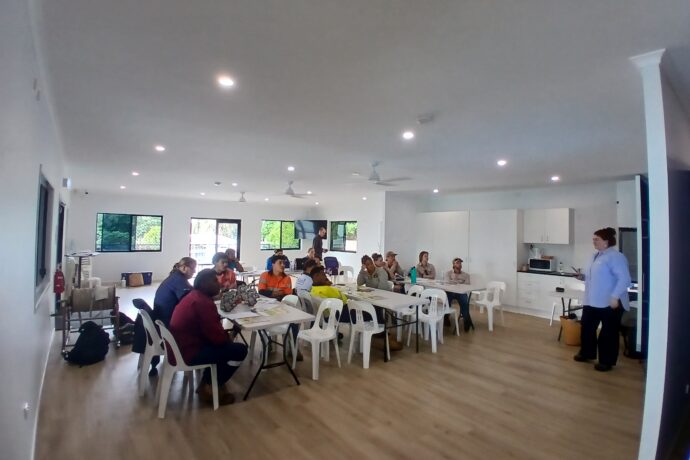
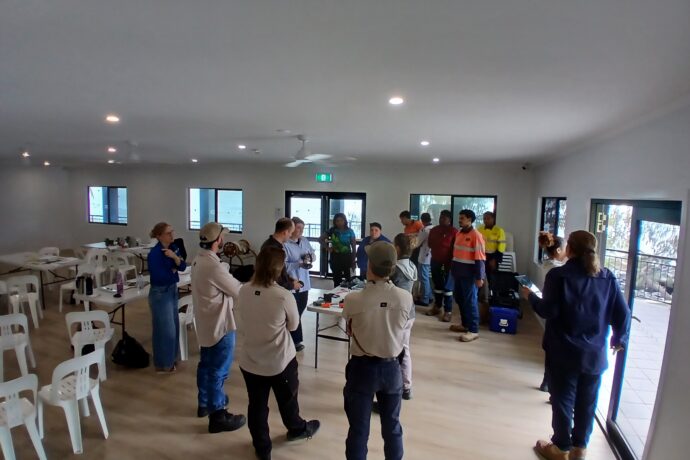
Pictured: Pioneer Catchment Landcare, Yuwi Aboriginal Corporation, CSIRO and Reef Catchments representatives collaborating on koala conservation tactics for the NRMEP Improving Koala Habitat and Connectivity project.
Building stronger data to drive smarter investment
Strong, consistent data is critical to the success of the project and was a key focus of the workshop. CSIRO’s Charley Geddes and Dr. Jonh McEvoy led the technical component, introducing participants to koala survey design and monitoring methods under the National Koala Monitoring Program (NKMP).
“By working with local partners and providing training in consistent survey methods and tools, we’re improving how we measure change over time and contributing to a broader understanding of koala habitat across the state,” said Charley.
Sessions focused on how to identify koalas in the field, including daytime searches and night spotlighting, and how to apply consistent, science-based approaches to data collection. Aligning local efforts with these national standards ensures the data collected is reliable, comparable and usable beyond the region – strengthening its value for decision-making and long-term conservation planning.
Participants were then introduced to digital tools that support this approach, including the Koala Counter app for structured surveys and Koala Spotter, which enables both practitioners and the community to record observations. They were also walked through the Koala Condition Assessment tool – known as “KoalaCAT.”
“The nearly developed KoalaCAT will play a key role in measuring the project’s long-term impact since good data underpins good decision-making,” Carlos said.
“This methodology captures practical indicators that measure short term improvements in koala habitat, indicators such koala food and habitat tree recruitment, weed impacts on their food trees, as well as data on koala predator activity. By using consistent methods and tools, we can track change over time and clearly demonstrate the outcomes of our investment.”
Importantly, this ensures that data collected on-ground feeds into regional and statewide reporting, aligning with NRM Regions Queensland (NRMRQ) indicator frameworks. This enables Reef Catchments to demonstrate measurable outcomes, linking on-ground works directly to improvements in habitat condition and koala conservation, while guiding future investment.
The workshop also included practical field activities, giving participants the opportunity to trial survey techniques and data collection in real-world conditions. Follow-up field training scheduled for later in the year will further build local capacity to carry out surveys and contribute to ongoing monitoring.
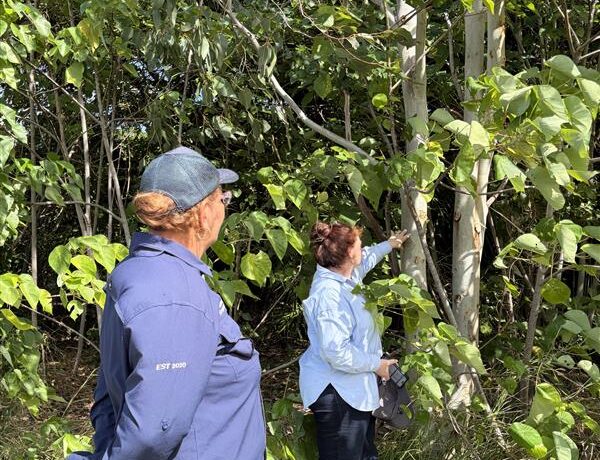
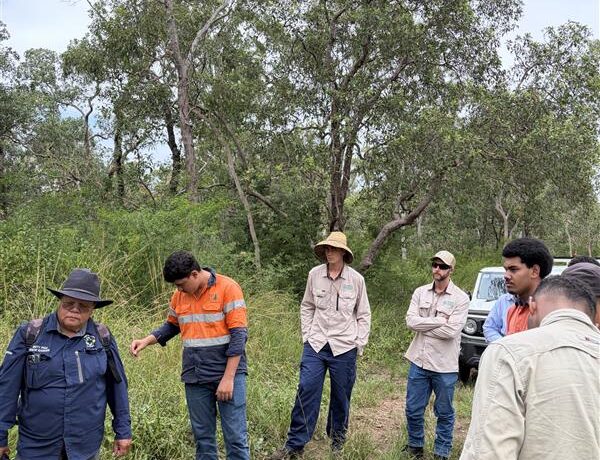
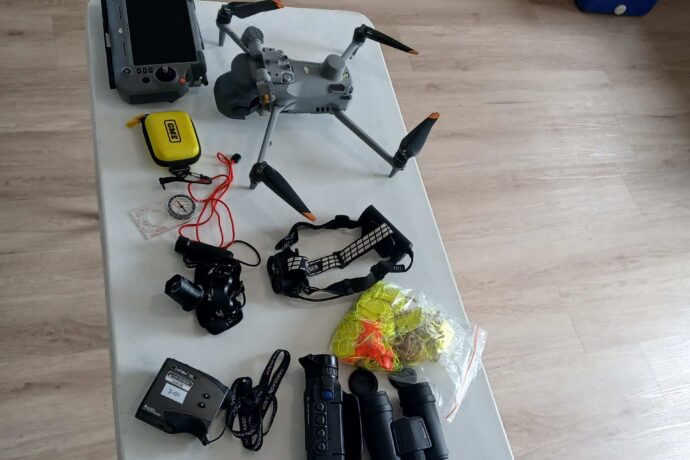
Pictured: Participants in the field learning to conduct a Koala transect to identify Koala presence and main fodder species (left and center), range of equipment to be used in monitoring and data collection for the NRMEP Improving Koala Habitat and Connectivity project (right).
Supporting the future of koalas in our region
Beyond site selection, the workshop strengthened relationships between project partners and built a strong foundation for coordinated delivery. Carlos said ongoing collaboration between organisations will be key to achieving meaningful results.
“We’re bringing together the right mix of skills, from scientific expertise through to local knowledge and on-ground delivery,” he said.
“That combination is what allows us to plan effectively and follow through with action that makes a real difference.”
The immediate outcome of the workshop is a refined set of priority survey sites, informed by technical data and local experience. Over time, this work will guide where habitat is protected and restored, improve understanding of koala population, and ensure investment is directed to areas where it will deliver the greatest impact.
For a region where koala populations are under increasing pressure, this work is vital. Reef Catchments NRM is ensuring conservation efforts are coordinated, targeted and measurable, supporting the long-term future of this iconic species.
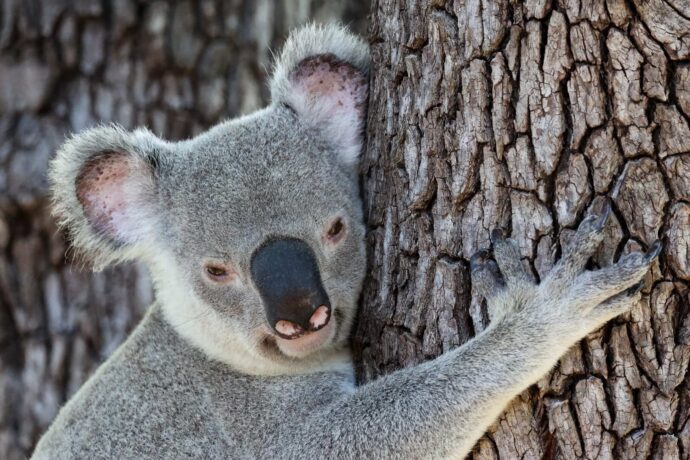
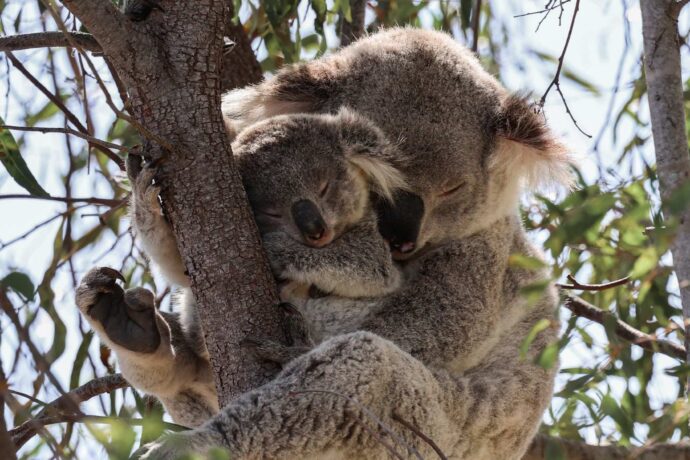
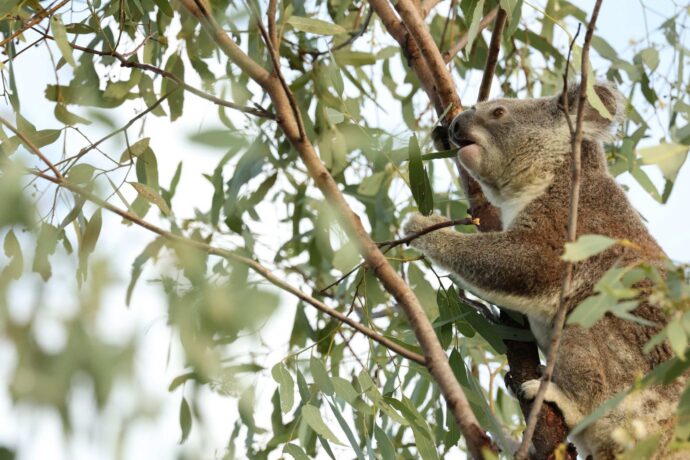
Pictured: Local Koalas captured by CSIRO’s Dr Charley Geddes
This project is funded by the Queensland Government through funding from the Natural Resource Management Expansion Program (NRMEP).