“This funding will allow us to scale up our efforts for critical ecosystems and to target hotspot areas where previous weather events have damaged key parts of the region,” said Katrina Dent, CEO of Reef Catchments.
“We’re incredibly grateful for the Queensland Government’s investment in natural resource management through the NRMEP.”
The investment reflects a broader recognition of the vital role regional NRM organisations play in delivering real, measurable outcomes for both communities and the environment.
“Regional natural resource management organisations like Reef Catchments are working hard to deliver outcomes that meet the needs of their communities as well as our precious land and water resources,” said Chris Norman, CEO of NRM Regions Queensland.
“The NRM Expansion Program will not only leave a lasting impact on Queensland’s iconic landscapes, it will also create jobs and boost local economies. We’re proud to be working alongside the Queensland Government and our regional NRM organisations to deliver big outcomes for people and for place through the Natural Resource Management Expansion Program.”
The NRMEP is part of a broader$117.84 million commitment to boost support for managing the state’s natural assets through on-ground land, water and biodiversity projects delivered by Queensland’s NRM sector. For Minister for Natural Resources and Mines Dale Last, the funding represents a return to meaningful support for regional organisations.
“This funding is about backing real action, by supporting local experts who understand their region and what it takes to protect it,” Minister Last said. “These projects will deliver real on-ground results for our environment and the communities who depend on healthy landscapes and waterways.”
$4.8 Million to Revive Cattle Creek
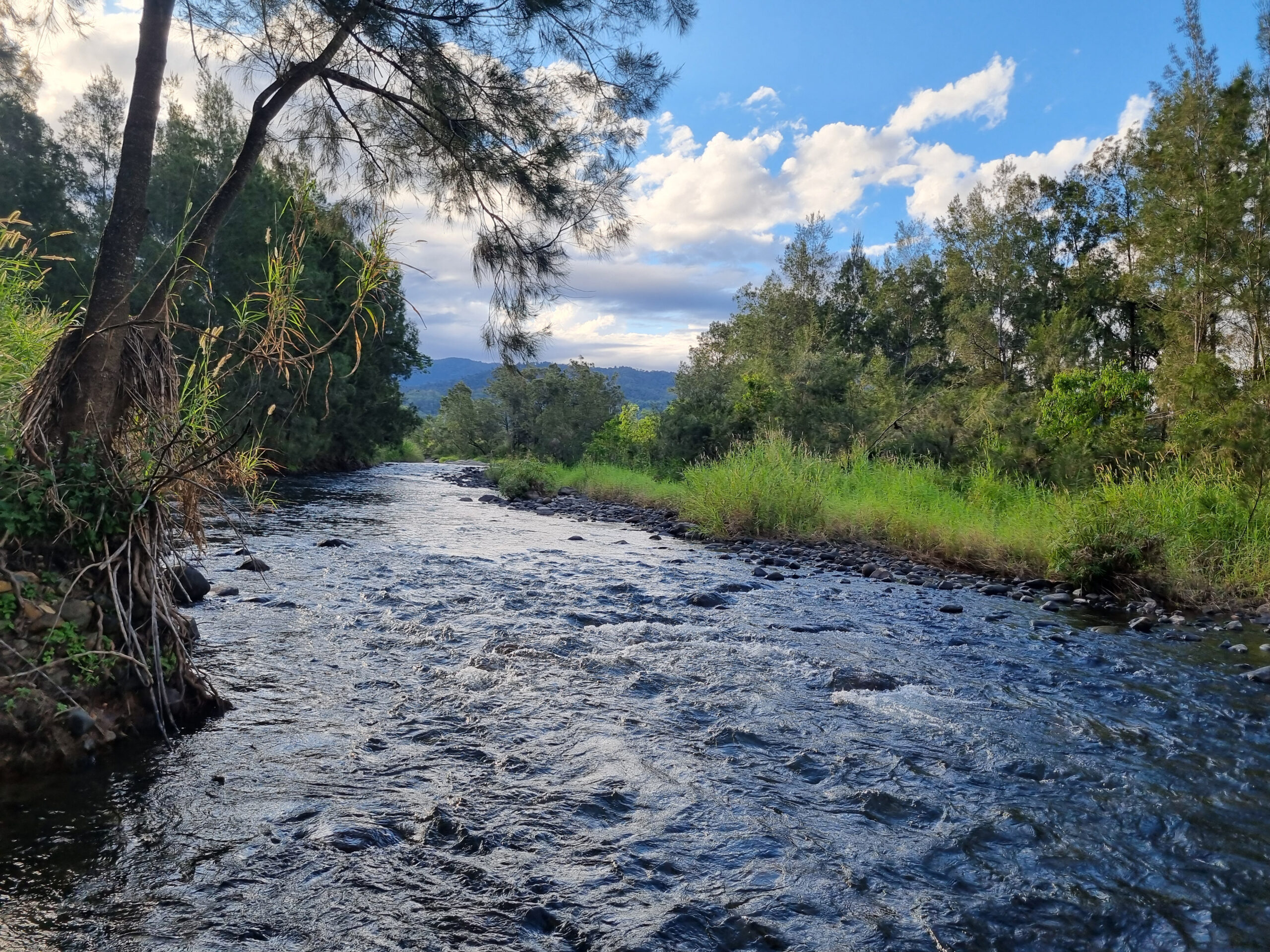
In the Pioneer Valley, Cattle Creek has long supported agriculture, biodiversity and community life. But erosion and sediment runoff have weakened its flow and threatened downstream reef health.
With $4.8 million in Queensland Government NRMEP funding, Reef Catchments will restore eight kilometres of streambank, stabilising the riparian corridor, enhancing aquatic habitats and reducing sediment entering the Great Barrier Reef lagoon.
“This is strategic restoration,” said Reef Catchments Program Director (Land and Water), Bernie Cockayne. “We’re working closely with landholders to stabilise eroded streambanks and safeguard productive agricultural land. By reducing sediment run-off into our waterways, we’re not only protecting the long-term viability of farming operations but also helping to preserve the health of the Great Barrier Reef.”
Cattle Creek
$1.9 Million to Improve Habitat Connectivity for an Australian Icon
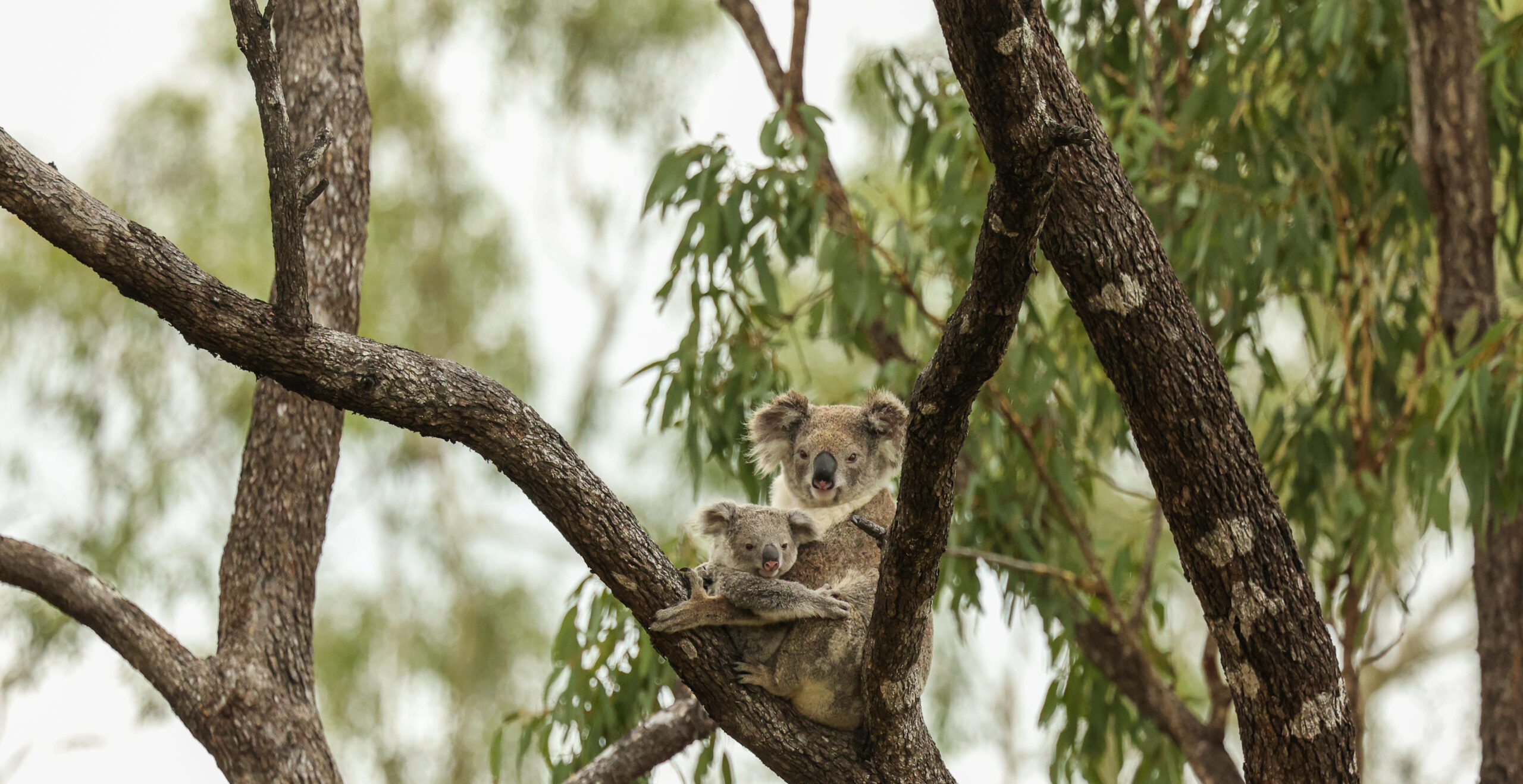
In the bushland between South Koumala and Eton, koalas are facing increasing threats from habitat fragmentation. With $1.9 million, Reef Catchments will improve connectivity of 57 hectares of prime koala habitat, by planting native trees, removing invasive weeds and fencing corridors to ensure safe passage.
“Koalas are part of our regional and national identity,” said Reef Catchments Program Director (Community and Environment), Alisha Steward. “By reconnecting fragmented bushland, we’re giving them space to move and thrive. This work wouldn’t be possible without the support of local landholders, who are vital partners in restoring habitat and protecting wildlife.”
This project is funded by Queensland Government’s Natural Resources Recovery Program.
Photo courtesy of Charley Geddes.
A New Era for NRM in Queensland
This $7.8 million investment marks a pivotal moment for the Mackay and Whitsunday region, strengthening Reef Catchments’ capacity to deliver targeted, high-impact environmental restoration.
From creek banks to coral reefs, koala corridors to community stewardship, these projects will enhance biodiversity, improve water quality and build resilience across the landscapes that sustain local livelihoods. It’s a clear demonstration of what’s possible when regional expertise is backed by meaningful support; a powerful step forward for the future of natural resource management in Queensland.
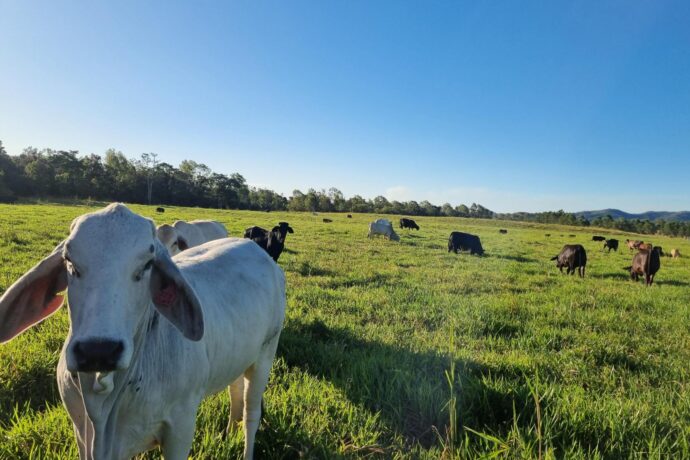
Feed supply can make or break a grazing enterprise. Too little, and livestock can lose condition, impacting productivity and profitability. Too much, and you tie up capital and nutrients in ungrazed pasture, reducing pasture quality and returns.
The solution? Knowing exactly how much feed is available and planning ahead. That’s where forage budgeting comes in. It’s a practical tool that gives more control over livestock management and operational efficiency.
What is Forage Budgeting?
Forage budgeting is a simple but powerful process that estimates available feed resources and compares them to livestock demand over a set period of time.
The process involves three key steps:
Estimate available feed within a defined area.
Calculate livestock demand based on the known intake of each class of animal.
Set the time frame over which the feed needs to support the stock.
The resulting forage budget shows whether your property is adequately stocked, and if not, how large a deficit or surplus you might expect. With this knowledge, graziers can make proactive, informed decisions to manage both livestock and pasture condition.
Why Prepare a Forage Budget?
A forage budget gives graziers greater control over their operation and supports better management decisions. Here’s how it helps:
Optimises pasture utilisation – Forage budgets can help graziers avoid under- or over- grazing of their paddocks. Striking the right balance maximises forage use while improving ground cover and soil health.
Prevents pasture deficits – Feed shortages can force reliance on costly supplements or early livestock sales. Forage budgeting enables early action, such as adjusting stocking rates or rotation timing, to reduce risk through dry periods.
Guides efficient stocking rates – Matching livestock numbers to available pasture is essential for both profitability and sustainability. A forage budget provides confidence to stock at levels that optimise returns while protecting long-term pasture health.
Supports healthy pastures – Consistent use of forage budgeting supports better groundcover, stronger pastures, and ultimately healthier, more productive animals.
We’re here to help
Preparing a forage budget is straightforward – but implementing it effectively takes experience and follow-up. The Reef Catchments team can assist graziers in developing, refining and applying forage budgets to suit local conditions.
To further support this process, Sam Skeat, owner and director of North Queensland-Based company Regen Ag Asset Management has been providing tailored forage management advice to graziers in the region and can help with your asset management questions.
Ready to build resilience in your grazing enterprise?
Get in touch with the team via the email address below to learn how forage budgeting can help you manage risk, improve pasture performance and strengthen the operations of your grazing enterprise.
Silly season is almost upon us! And by that, of course we mean coral spawning season. This weekend, corals throughout the Great Barrier Reef will spawn, releasing their reproductive bundles into the water column in a synchronised event. For our Reef Team this is a very busy time of year!
As a partner of the Boats4Corals project, alongside the Australian Institute of Marine Science (AIMS), a range of local tourism operators, and Traditional Owners, we collect coral spawn and release the larvae into other reef areas which may not get as much natural larval inflow, and are therefore slower to recover from impacts.
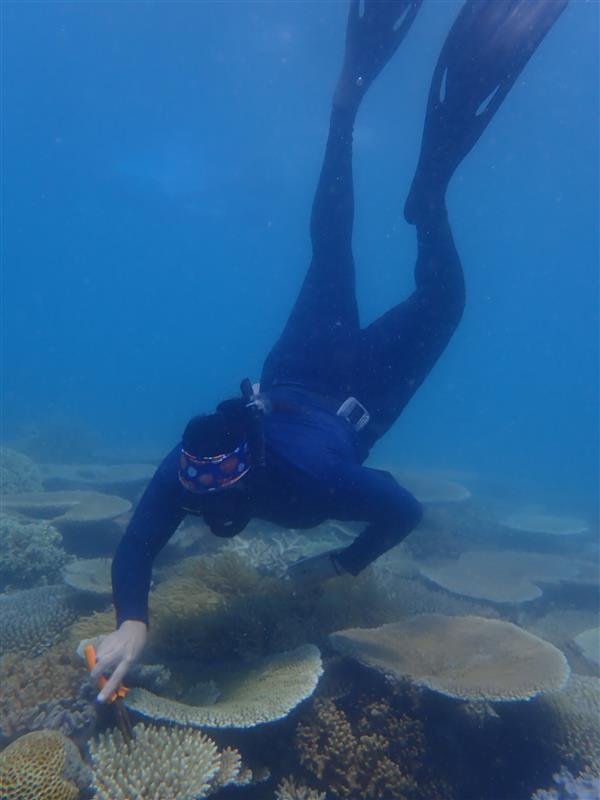
The preparation for this year’s spawning has already begun. Last week, the Boats4Corals team inspected 12 sites around the Whitsundays for their readiness to spawn, referred to as gravid coral checks.
During gravid coral checks, we assess several factors to determine whether a site is suitable for coral spawn slick collections. Key considerations include the extent and diversity of hard coral coverage, the presence and development stage of coral eggs, and whether the area is protected or has any environmental or physical barriers that might inhibit slick formation. These elements help us evaluate the site’s potential for successful collection and monitoring.
Reef Catchments Great Barrier Reef Manager Cass Hayward conducting gravid coral checks. Photo courtesy of Red Cat Adventures.
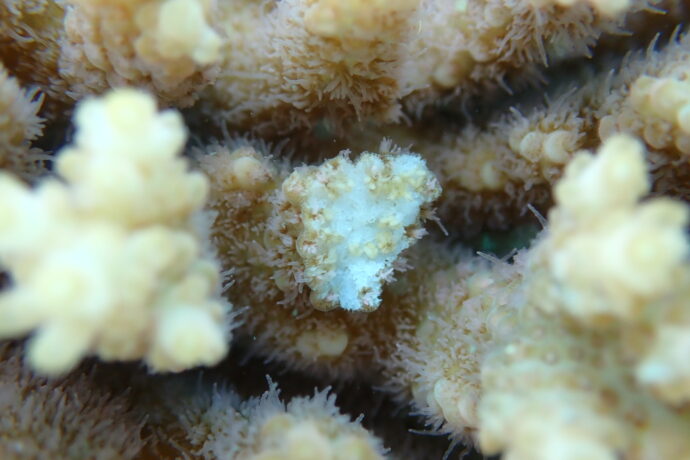
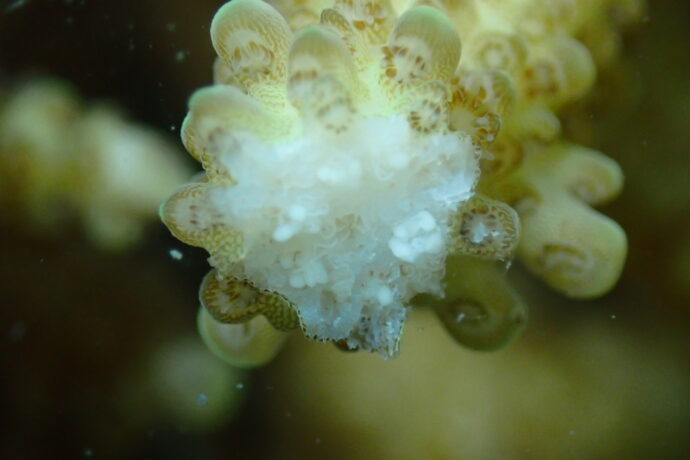
To answer these last two questions, the team take small samples of coral and look at the skeleton*. Egg bundles are visible as tiny spheres, often in groups, and the developmental stage of the eggs can be inferred by their colour. Generally, eggs start out as white and become pink as they mature.
The team sampled 370 hard coral colonies over two days, approximately two thirds of which had eggs. We have used the data to narrow down our target sites for spawn collection in a fortnight, having identified a subset of sites which are expected to be productive.
Ultimately the amount of spawn we are able to collect is very strongly influenced by the weather on the night. However, the extensive presence of developed eggs throughout the Whitsunday islands is a promising sign for this year’s fieldwork!
Cream (left) and white (right) eggs within Acropora corals. Photos supplied by Lisa McMullen – Daydream Island Living Reef.
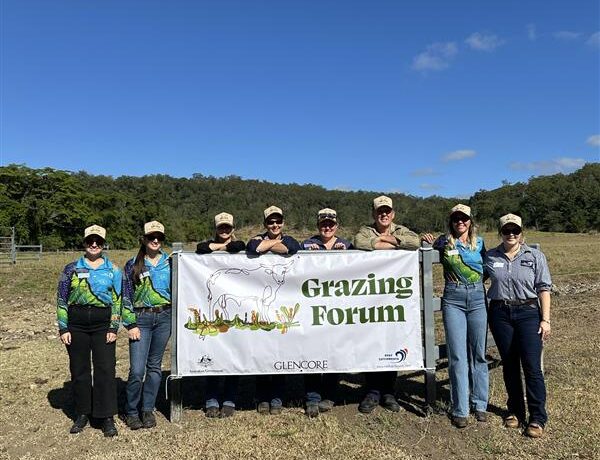
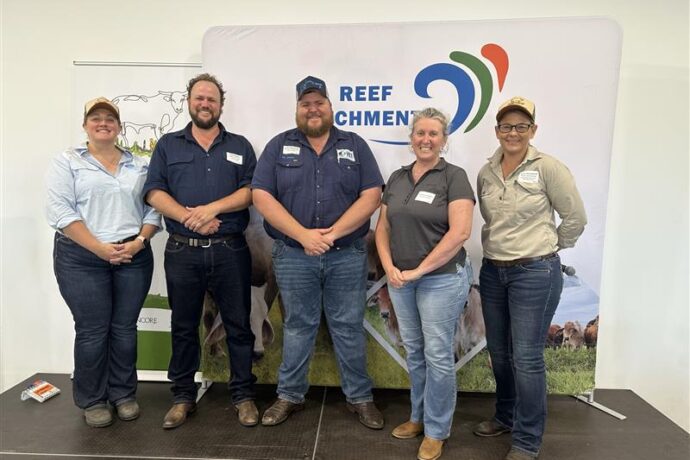
For the first time in its 12-year history, the Reef Catchments Grazing Forum and Field Day were held in the Whitsundays – and it was a resounding success.
Over two days, graziers, ag professionals and community members came together to share knowledge, explore innovation, and strengthen connections across the region. The event, delivered by Reef Catchments’ Sustainable Agriculture team through funding from the Australian Government and Glencore Coal Australia, highlighted the importance of collaboration, practical learning and community-led sustainable land management in the grazing sector.
Field Day: Innovation Meets Practicality
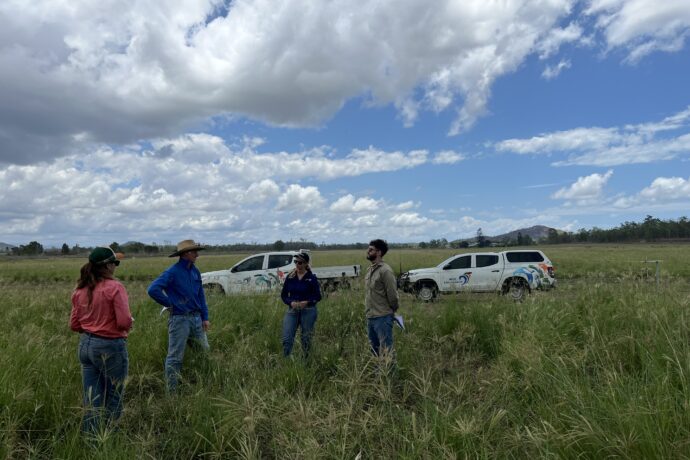
Hosted by generous landholders at Yalboroo, the field day focused on the real-world challenges of converting old cane paddocks into productive grazing pastures. Attendees rotated through hands-on sessions covering weed management, pasture nutrition and soil health, including pH and texture assessments led by Reef Catchments and TNQ Drought Hub.
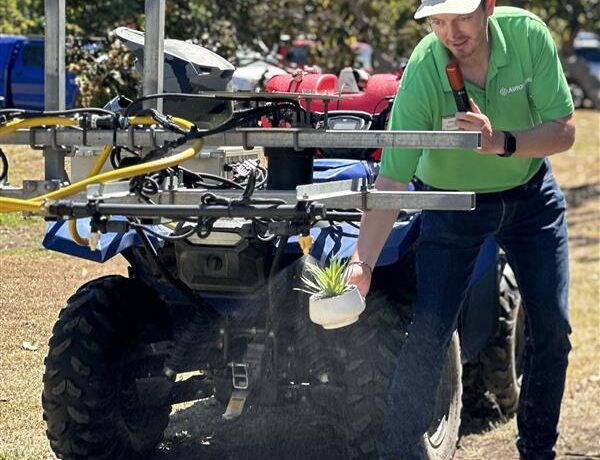
A standout moment was the live demonstration of AutoWeed’s AI drone technology, which is being trialled to support more targeted and efficient weed control. Kevin Moore, Principal Project Officer for Sustainable Agriculture at Reef Catchments, said the interest from landholders was clear.
“AutoWeed is a tool we’re looking at using to reduce pesticide use by targeting specific weeds. That means lower costs for landholders and less runoff into our waterways – a win-win for graziers and the Great Barrier Reef.”
Farmacist Mackay Extension Agronomist Mandy Jeppsen also spoke on the importance of combining weed control with nutrition for successful pasture establishment.
“If graziers can get a handle on both from the start, it reduces ongoing maintenance costs and they will have good pasture establishment up front. A holistic approach combining grazing management, mechanical methods like slashing and nutrition is key.”
The field day was a chance for graziers to connect, share experiences and learn from one another, as well as gain technical learnings.
“This is my 10th Grazing Forum,” said grazier Travis Perry. “It’s great to see how the event has progressed. There’s still a lot of people willing to learn and take the time to come to these events. That’s what makes it worthwhile – it’s been a great event to attend once again.”
Forum: Genetics, Herd Health and Community Connection
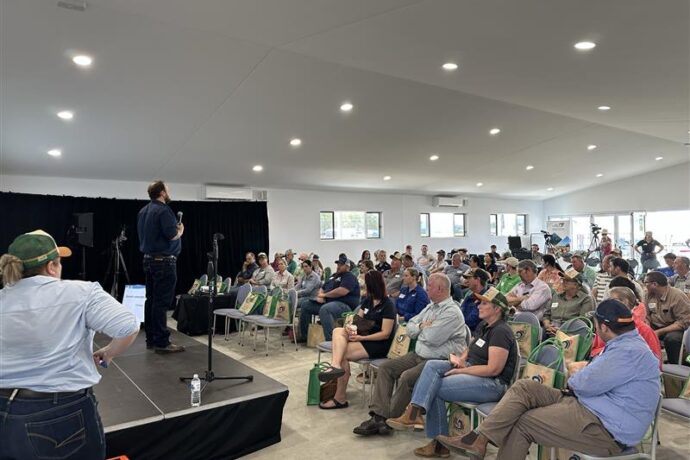
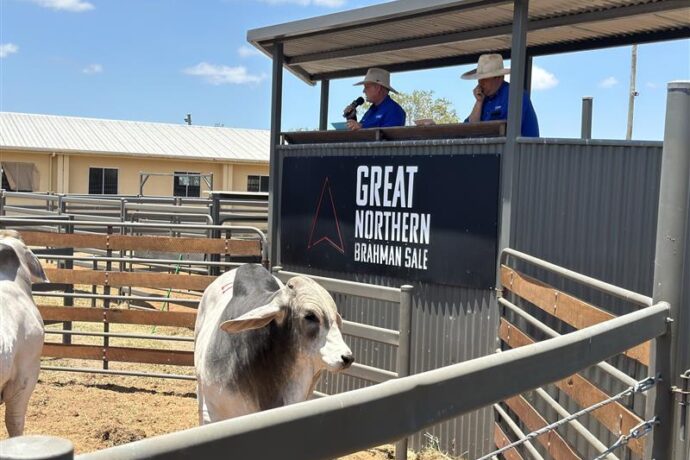
Held at the Proserpine Showgrounds, the Grazing Forum built on the momentum of the field day with a strong focus on cattle management. Topics included genetics, disease prevention and bull selection, with expert insights from Lawson Camm (Cambil Brahmans), James Kent (Great Northern Brahman Sale) and Tim Emry (Department of Primary Industries).
Attendees were treated to a showcase of Brahman bulls and a breakdown of complex topics like EBVs and genetic scoring, helping graziers make informed decisions tailored to their enterprise goals.
“We’ve had Lawson Camm and representatives from the Great Northern Brahman Sale speak down at the Proserpine Showgrounds showring, which was pretty spectacular,” said Reef Catchments Sustainable Agriculture Facilitator, Kellie Harmsworth. “There are quite a few good specimens of Brahman bulls coming through. I’ve really enjoyed the day. It’s been a casual, relaxed atmosphere with great attendance from landholders, sales reps, industry reps and the general community.”
Jason Mansfield from Greater Whitsunday Vet Service also spoke on the importance of herd health, reinforcing the need for proactive management and regular vet engagement.
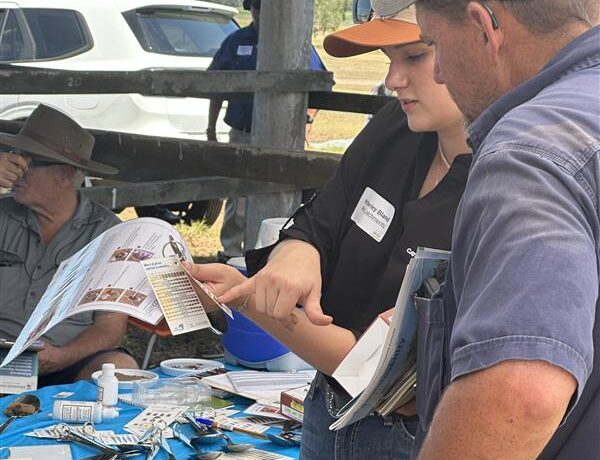
Mandy Jeppsen reflected on the broader impact of the event, “These sorts of events are rare in this region, especially with grazing not always seen as a priority in cane-growing areas. There aren’t many places where graziers can meet suppliers and service providers, hear from guest speakers, and learn from each other all in one spot. It’s a great way to build community – the more people you connect with, the more ideas you can share, and everyone benefits from that.”
The success of this year’s event highlights the growing appetite for practical, locally relevant grazing support in the Mackay Whitsunday region. Reef Catchments is proud to support graziers through events like these, which foster innovation, collaboration, resilience and community.