
Proserpine sugarcane growers are leading the way in adopting smart technology that solves the dual challenge of rising pesticide cost and labour shortages. Through the Proserpine Integrated Project (PIP) AutoWeed project, Reef Catchments is working alongside researchers from James Cook University to deliver on-ground results that make practical, profitable sense for local farms while sustaining the long-term health of our waterways.
The project’s first trial at Kelsey Creek has proven that we can match the 95%+ weed control of blanket spraying while significantly reducing herbicide runoff. By using Artificial Intelligence (AI) to target weeds with precision, growers can cut chemical use by up to 80%, securing better outcomes for both the paddock and the catchment
“By only spraying where the weeds are, we cut herbicides and costs while protecting our waterways,” says Lead project researcher Associate Professor Mostafa Rahimi Azghadi. “The Reef wins, and growers win.”
Why it Matters for Water Quality:
- Reduced Runoff: Direct proportional reduction between herbicide sprayed and concentration in runoff.
- Measured Impact: Early results indicate a 46% reduction in chemical concentration in water runoff.
- Scalable Solutions: Data collected during this trial improves accuracy for widespread regional adoption across the Mackay Whitsunday Isaac region.

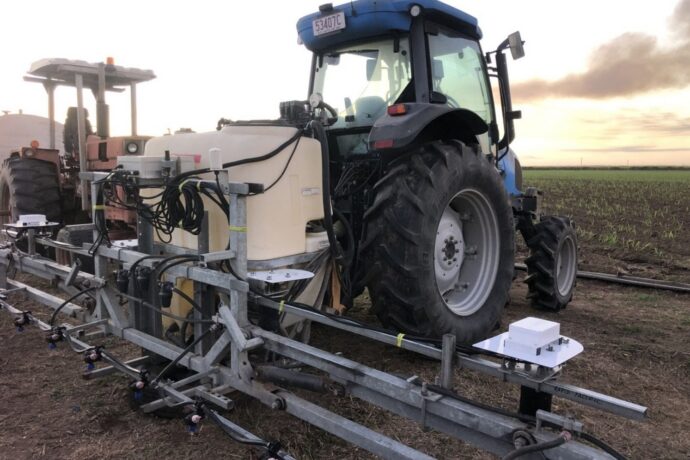
The Autoweed project is funded through the Queensland Government’s Queensland Reef Water Quality Program and delivered by James Cook University in partnership with Reef Catchments under the Proserpine Integrated Project.