Mangroves and saltmarshes are amongst the most valuable – and vulnerable – blue carbon ecosystems along the Mackay coastline. They stabilise shorelines, filter water flowing to the Great Barrier Reef, store carbon and provide habitat for fish and wildlife. When they decline, the impacts are felt across the entire coastal system.
Reef Catchments’ Inshore Resilience project is working to reverse that trend by turning years of community-collected data into targeted, measurable on-ground restoration. Delivered through the Queensland Government’s $117.84 million Natural Resource Management Expansion Program, the project establishes a formal partnership with Eathwatch to ensure restoration is guided by robust, locally collected evidence.
At its core, the project answers a simple question: what happens when citizen science doesn’t stop at monitoring, but directly drives action?

From community insight to on-ground works
For nearly 20 years, MangroveWatch has supported communities across Australia to monitor mangrove and saltmarsh ecosystems. In the Mackay region, that work has created a strong evidence base, with data collected by Traditional Owners, Pioneer Catchment Landcare, Reef Catchments and community volunteers through the Earthwatch Australia–MangroveWatch partnership, with support from Great Barrier Reef Foundation.
In 2025, that data was brought back to the community through Local Action Planning workshops. The data represented 112.8 km of shoreline mangrove monitoring across three estuaries, along with surveys of 12 saltmarsh sites comprising more than 200 individual assessments. This work was delivered by 100 community members contributing over 700 hours of citizen science effort. Through the workshops, participants reviewed what had changed across their local sites, identified key threats and prioritised areas for action.
Building on this momentum, Mackay Conservation Group has secured separate funding to continue saltmarsh monitoring efforts, building on the strong foundation established through MangroveWatch. This ongoing data collection will help track how these ecosystems respond over time and inform future on-ground priorities.
“Over many years, MangroveWatch has worked with Traditional Owners, community volunteers and local organisations to build a better understanding of Mackay’s coastal wetlands and track their health over time through citizen science,” said Jock Mackenzie, Co-Founder MangroveWatch & Senior Program Manager at Earthwatch Australia.
“What’s exciting about this project is seeing those observations and local knowledge translated into real on-ground action to protect Mackay’s coastal wetlands. That’s how citizen science moves beyond monitoring to create lasting stewardship, helping communities play an active role in identifying priorities and shaping the future of the places they care about.”
Reef Catchments identified an opportunity to take the next step; moving from knowledge to implementation. Using MangroveWatch data and community priorities, two sites were selected for immediate action:
- a mangrove system along the Pioneer River
- a saltmarsh wetland at Bucasia
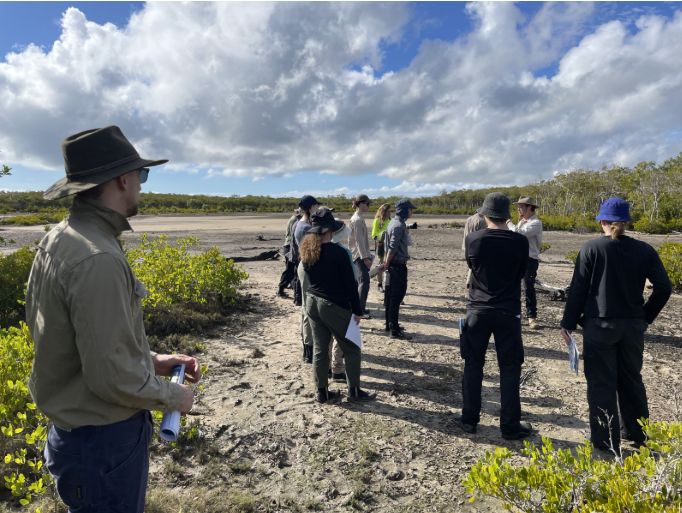
Six months into the project, on-ground works are now underway, including weed control, revegetation and access management to reduce pressures such as illegal vehicle use. These actions are targeted responses to site-specific threats identified through citizen science data.
Measuring ecosystem recovery
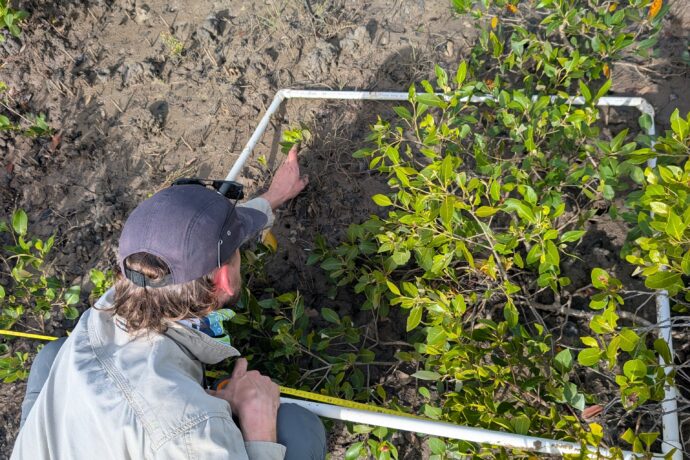
A defining feature of the Inshore Resilience project is its focus on measurable outcomes. Before works began, Reef Catchments – alongside the Yuwi Aboriginal Rangers and MangroveWatch – established baseline condition data for both sites. This included vegetation structure, weed presence, and key ecological indicators. By establishing this baseline, the project creates a clear framework to track change over time.
Great Barrier Reef team Senior Project Officer Morgan Thomas said this approach is critical to demonstrating real impact.
“We’re not just implementing restoration; we’re setting up a system to demonstrate that what we are doing is working and helping to build resilience at these sites” Morgan said.
“We’ve established baselines for vegetation, site condition, and indicators such as crab burrow density, so we can track improvements over time. That gives us a clear line between the actions we take and the outcomes we achieve.”
“It also means the community can see the difference their data has made – from identifying the problem, right through to measuring recovery.”
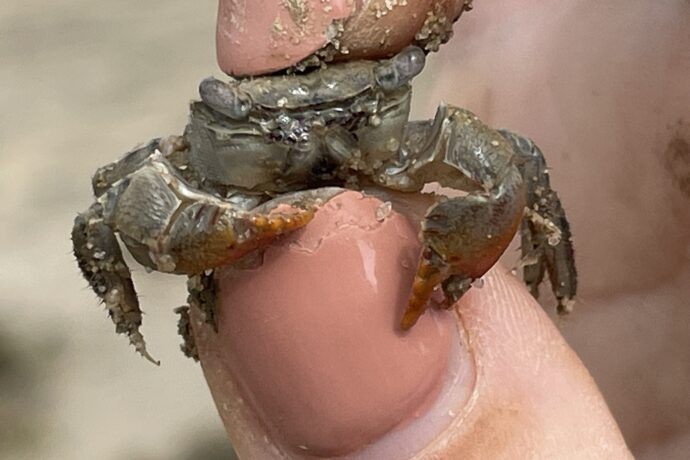
During baseline surveys, the team found an Australasian mangrove crab, suspected to be Parasesarma longicristatum. If confirmed, this would be the first recorded sighting in the Mackay region; a significant finding that expands understanding of local biodiversity and habitat range.
“One of the most telling indicators of saltmarsh recovery is crab activity, as burrows reflect improving sediment conditions and return of ecological function” Morgan said.
“The potential presence of Parasesarma longicristatum is particularly exciting because there are no documented records for this species in the region. Discoveries like this highlight how restoration work is not only improving habitat condition but also deepening our understanding of the ecosystem itself.”
“Establishing baseline data on crab activity ahead of restoration works will provide us with one of many ways for tracking ecological change over time and understanding how the wetland responds following intervention.”
Delivering measurable impact
The Inshore Resilience project demonstrates a model for impact-driven restoration:
- Data-driven site selection – using long-term citizen science to prioritise where investment will have the greatest benefit
- Baseline establishment and ongoing monitoring – enabling before-and-after comparisons of ecosystem condition
- Targeted interventions – addressing specific, identified threats at each site
The Inshore Resilience project underscores the value of local knowledge, strong partnerships and on-ground action in building resilient landscapes for Queensland’s future.