• Skip to primary navigation
  • Skip to main content
Reef Catchments Three Colour PMS
  • About
    • Annual reports
    • CEO’s Message
    • Board members
    • Our team
    • Careers
    • Partners
    • Queensland NRM Network
    • Strategic plan
    • Become a member
    • Update your contact details
  • Projects
    • Sustainable Agriculture
    • Waterways
    • Biodiversity
    • Great Barrier Reef
  • NRM Plan
    • NRM Plan 2014-2024
    • NRM region map
    • NRM Plan supporting documents
  • News
    • Articles
    • Newsletters
    • Media releases
    • Citizen Science Calendar
  • Events
  • Resources
    • Species, ecosystems & pests
  • Get involved
  • Careers
  • Contact us
×
  • About
    • Annual reports
    • CEO’s Message
    • Board members
    • Our team
    • Careers
    • Partners
    • Queensland NRM Network
    • Strategic plan
    • Become a member
    • Update your contact details
  • Projects
    • Sustainable Agriculture
    • Waterways
    • Biodiversity
    • Great Barrier Reef
  • NRM Plan
    • NRM Plan 2014-2024
    • NRM region map
    • NRM Plan supporting documents
  • News
    • Articles
    • Newsletters
    • Media releases
    • Citizen Science Calendar
  • Events
  • Resources
    • Species, ecosystems & pests
  • Get involved
  • Careers
  • Contact us
Hide Search

Archives for June 2025

Learning from the Land

jamie · Jun 30, 2025 · Leave a Comment

Learning from the Land: Why Walking the Paddocks Leads to Smarter Funding

A bright winter’s morning at Mt Ossa set the scene for a recent visit showcasing innovation, resilience, and the power of strong local connections in sustainable agriculture.

It’s about understanding what’s working on the ground and hearing directly from landholders,” said Chris Gogala, Assistant Director in the Sustainable Agriculture Branch from the Department of Agriculture, Fisheries and Forestry (DAFF). Chris, who travelled from Canberra, was joined by Sustainable Agriculture Governance Officer Machaela Naidoo, as part of a broader regional tour to meet stakeholders and observe sustainable agriculture projects in action across North Queensland.

Reef Catchments’ Sustainable Agriculture Manager Todd McNeill and Facilitator Kellie Harmsworth hosted the visit, taking the DAFF team to the Mt Ossa property of Ken and Mary Ede of Longmile Mangoes — long-time collaborators with Reef Catchments and strong advocates for sustainable agriculture. The Edes’ farm is primarily focused on mango production but also supports mixed cattle and pasture hens. It’s a living example of progressive farming techniques grounded in soil health and practical innovation.

Over the years, Ken and Mary have taken part in several regional workshops, including the Grazing Forum and Soil Symposium, and accessed grant support to trial and implement changes that have helped reduce input costs and boost production, while supporting improvements in soil health and environmental outcomes. A core focus for them has been soil improvement, something they’ve pursued through sustainable farming practices and homemade fish and kelp-based biofertilisers.
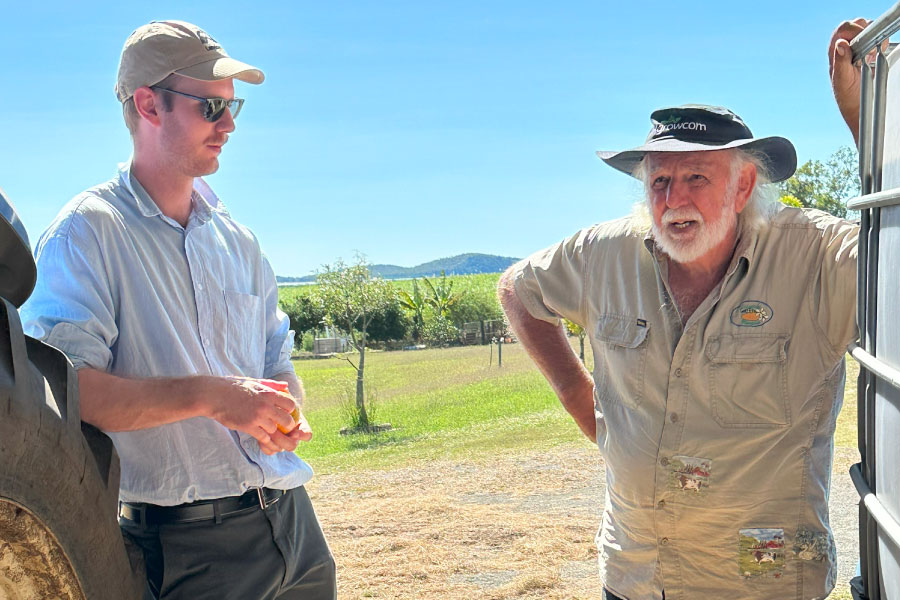
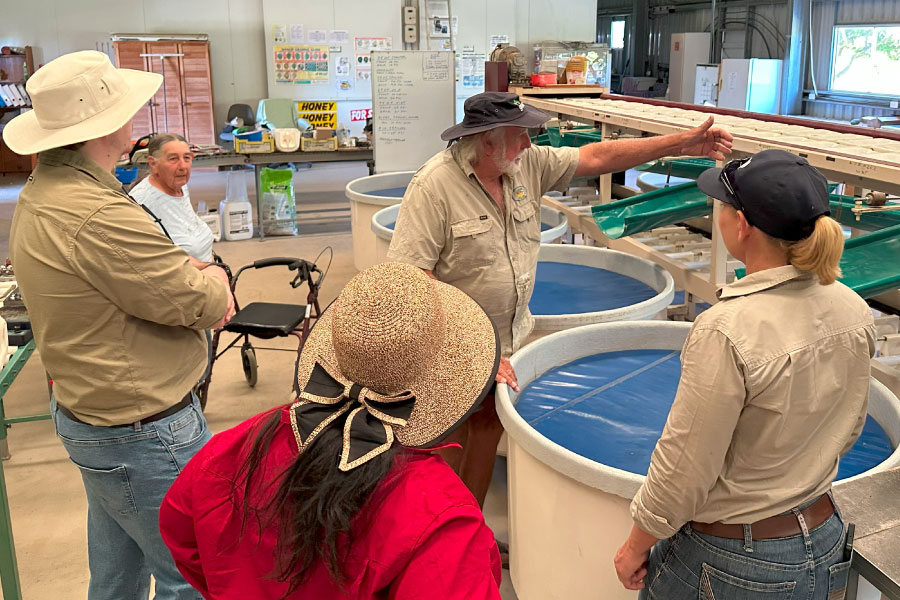
Chris Golgoa (DAF) and Ken Ede discussing biofertiliser
Chris Golgoa and Ken Ede discussing home made biofertilser
Ken Ede showing his mango packing production line
Ken showing his mango processing and packing line
Ken Ede, Todd McNeill, Chris Golgoa and Michaela Naidoo viewing soil testing results
Ken Ede showing the results of several soil testing trials

“It doesn’t smell great,” Ken joked, “but the results speak for themselves.” Soil testing across the property has shown clear improvements, though Ken is quick to note the variability across the farm’s landscape. “What works in one paddock, or one property might not work in another. That’s why learning and experimenting is so important.”

Chris and Machaela were able to see this firsthand, walking through the Edes’ fertiliser production area, viewing their custom fertiliser spreader, and visiting the mango packing shed where Ken shared insights into the R2E2 mango variety. “We usually average packing about 10 per box, compared to the industry standard of 12-14,” he said, proudly noting the size and quality of the fruit.

Rural view over cattle grazing peacefully in a field

Over a relaxed morning tea on the shady veranda, with views over the garden and cattle fields, Ken shared data from his latest soil tests and spoke candidly about the journey of trial, error, and refinement that has shaped their approach.

Todd McNeill echoed the importance of visits like this. “Ken and Mary embody what sustainable agriculture is all about. Their willingness to adapt, learn, and share their experience builds resilience in their own operation and inspires others across the region. They’re not just great land managers, they’re terrific advocates for positive change.”

The visit was a powerful reminder of the value of collaboration between government, local organisations like Reef Catchments, and the people who work the land every day. It’s through these shared experiences that ideas grow, solutions take root, and agriculture in the region is better positioned to face future challenges.
Building Strong Foundations for Women in Agriculture

jamie · Jun 19, 2025 · Leave a Comment

In the heart of the Mackay Whitsunday Isaac region, a quiet revolution is taking place. One that is led by the women who live, work, and thrive in the agricultural sector. As farming families adapt to shifting roles and the evolving needs of agriculture, this group is stepping up to support and empower a vital part of the industry: women. 

Reef Catchments Sustainable Agriculture Facilitator, Kellie Harmsworth, lives by the mantra: “If you can’t see the light at the end of the tunnel, march down there and light the darn thing yourself!”  

It’s a bold mantra, and one that many women in agriculture will resonate with; equal parts grit, humour, and quiet determination. It’s also a sentiment that sits at the heart of the Mackay Whitsunday Isaac Women in Agriculture (WiA) group – an initiative that recognises how vital it is to create space for women who are part of agriculture; on the land to connect, grow, and be heard. 

“The WiA group was created as I had seen the need – from my own personal experience – for women who work on farm or within the agriculture sector, to have a comfortable space for connecting, sharing and learning. I’m utilising word of mouth, social media and other platforms to provide growth opportunities for ladies in our region,” said Kellie. 

“Life is so busy and can at times be consuming, isolating and overwhelming a simple opportunity could potentially create a more positive pathway for someone who, like all of us, are on a journey.” 

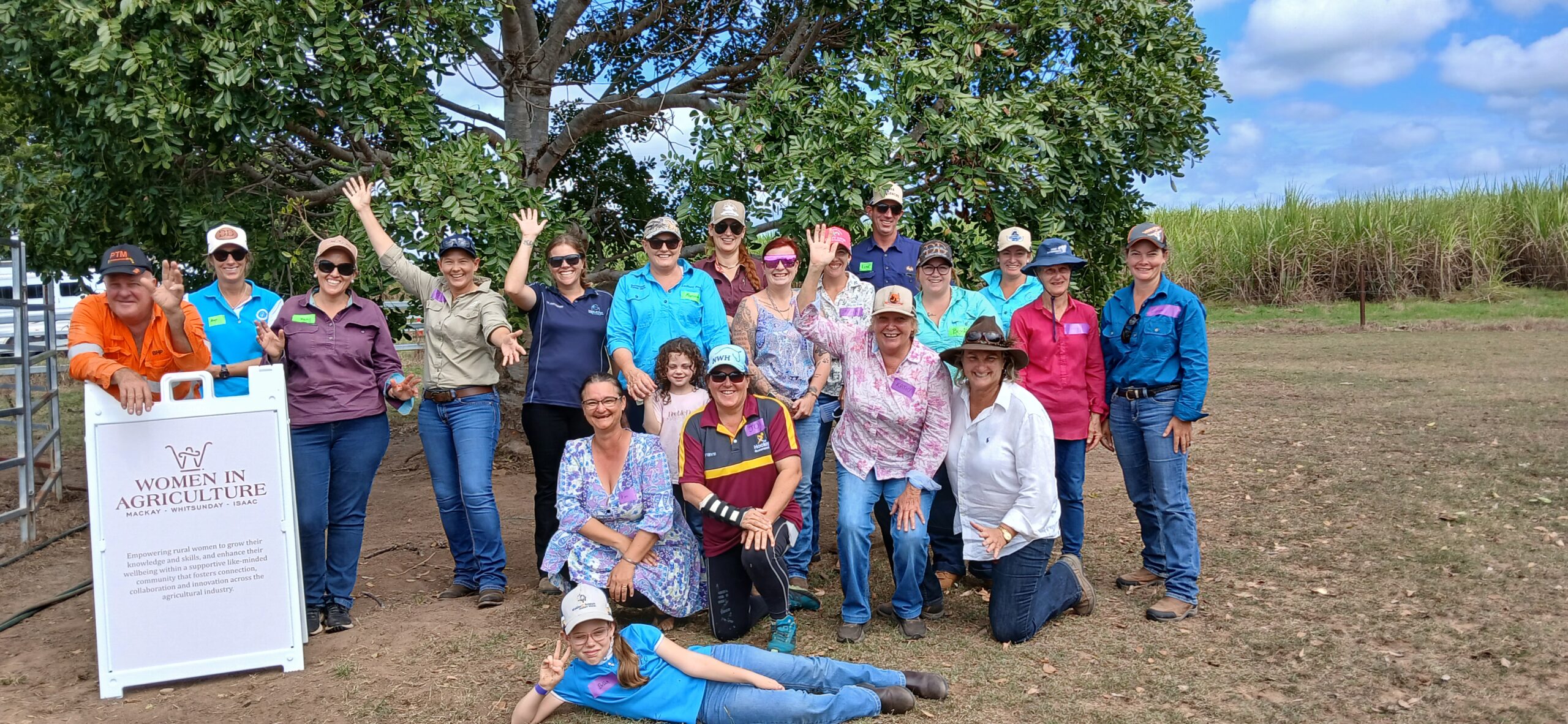
group photo of women with women in agriculture sign in front of cane field.

Recent WiA Farm Animal First Aid Workshop at the Calen Trail & Horse Sports club.

WiA aims to strengthen the everyday resilience of women who balance family, farm, and often off-farm work. It’s about building the confidence to lead, the clarity to set goals, and the community to lean on when things get tough. Perhaps most importantly, it’s about visibility: making sure women are seen—not just as supporters of farming businesses, but as co-drivers and custodians of them. 

“It’s a community,” said local grazier Sharon Yensch, “where we are isolated as farmers with commitments to our family and farm, and we can forget ourselves. We lose our identities.” 

“This group helps support my self-worth as a Woman in Ag. It gives us a comfortable environment to learn, share, and connect to help create healthy minds.” 

Women who join WiA groups often speak about how empowering it is simply to be in a room where they’re not alone in their challenges. The shared conversations about time management, delegation, farming partnerships, and goal setting help break the mould and build healthier personal and professional habits. 

As Sharon puts it, “Farming is about being in a partnership. What tools or methods can we learn to better manage time, plan ahead, and support one another? Sometimes, we just need that reminder to wind back and make time to smell the roses.” 

And it’s not just about the now – it’s about the future. 

“We are custodians of our farms,” Sharon said. “What are we leaving for the next generation? What differences are we making? Plant the seed, keep watering – and it will grow.” 

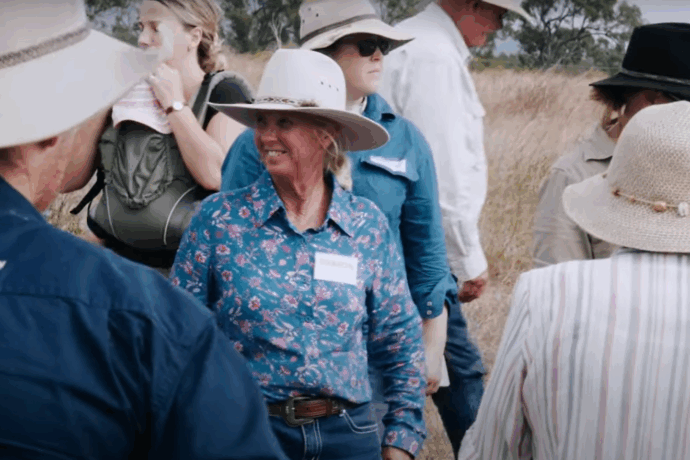
Sharon Yensch (pictured in far left image) and Mark Yensch (pictured with Sharon in far right image), hosting a Reef Catchments Peer to Peer workshop on their property in Bowen.

A Chance to Connect 

The next Women in Agriculture gathering will be held on Saturday, July 5, at Sharon Yensch’s property in Bowen. The event—“Building Strong Foundations”—will provide a relaxed, supportive space to explore identity, purpose, and practical strategies for managing life and work on the land. Featuring guest speaker Kaitlin Tilly and hosted with community in mind, it’s another opportunity for women to come together, share stories, and build lasting connections. 

For more information about the Women in Agriculture group or to join the next event, please contact Kellie Harmsworth: saf@reefcatchments.com. 

Erosion Soil Sampling for Streambank Stability

jamie · Jun 6, 2025 · Leave a Comment

Erosion Soil Sampling for Streambank Stability

by Emily Wilson, Project Officer – Waterways

Earlier this month, my colleague Kelsey Marek and I assisted with erosion soil sampling at a streambank site along the O’Connell River. This is one of the erosion sites we are hoping to remediate as part of Reef Trust’s Landscape Repair Program.

Due to the steepness of the bank, Reef Catchments engaged a local drilling contractor to collect samples from the surface down to a depth of 6m – which helped avoid safety risks and spared us from the usual dirt-covered venture of a typical soil sampling day.

Riverbank site for erosion soil samples Reef Catchments Waterways project

Analysing the soil allows us to assess erosion risk by calculating dry bulk density and the proportion of fine sediment particles (like silt and clay), which contribute to sediment runoff into the Great Barrier Reef.  This information helps us estimate sediment yields, and design targeted, cost effective erosion control treatments.

Back in the office, we took over the hallway to lay out the full 6m of soil samples – fortunately it was a quiet day in the office! Laying out the samples, we examined the different soil layers, noting changes in colour, texture, structure, moisture and strength before sending them off to a lab for analysis.

Seeing the full 6m profile laid out was a great reminder of how much variability exists below the surface and just how quickly soil characteristics can change from one layer to the next. Using erosion soil sampling to understand the soil helps us design more effective erosion control solutions, helping farmers protect valuable agricultural land, and reducing sediment runoff into waterways and the Great Barrier Reef, which impacts reef resilience and biodiversity.

erosion soil samples from erosion bank
erosion soil samples evaluation at the office Reef Catchments NRM


The Waterways team is dedicated to working with landholders to achieve big outcomes within the waterways space.

See more information on projects being carried our by our Waterways team.

World Environment Day: Local Actions, Global Impact

jamie · Jun 5, 2025 · Leave a Comment

At Reef Catchments, World Environment Day is more than a date on the calendar, it’s a timely reminder of how local action, when done with care and purpose, can ripple outward to create real, lasting change. While global headlines focus on large-scale environmental challenges, we see every day how small, consistent efforts right here in our region are helping protect the planet, starting in our own backyard!

Our work in natural resource management is grounded in practical, science-based approaches that care for land, water, and biodiversity. Whether it’s stabilising streambanks to prevent erosion, supporting farmers in adopting water-smart practices, or planting native vegetation to restore critical habitats, each project we take on is a piece of a much larger puzzle. Together, these efforts contribute to improved water quality flowing into the Great Barrier Reef and stronger, more resilient ecosystems across the Mackay, Whitsunday and Isaac region.

On any given day, you’ll find our teams and partners working in the field, removing invasive weeds, planting native trees, monitoring soil and water health, and engaging with landholders to support sustainable agriculture. These actions may seem small in isolation, but collectively they build healthier landscapes, protect threatened species, and help communities better adapt to a changing climate.

Importantly, our work is only possible through the power of community. From school groups helping plant trees, to landholders trialing new grazing or cropping methods, to volunteers joining beach clean-ups and citizen science projects, local people are at the heart of every success. Their passion and commitment are proof that everyone has a role to play.

On World Environment Day, we celebrate these everyday efforts. They show us that we don’t have to wait for global agreements to make a difference. Every weed pulled, every tree planted, every thoughtful decision on the land is a step toward a healthier future.

This year’s theme“ Our land. Our future.” couldn’t be more relevant. When we care for the environment around us, we’re investing not just in the health of the planet, but in the well-being of future generations.

Let’s continue working together to protect what makes our region special, its natural beauty, biodiversity, and strong, connected communities. Because when local action is consistent and community-driven, it adds up to something powerful. And that’s worth celebrating! Not just today, but every day.

Out and about: Mirani Primary School learns about erosion

jamie · Jun 2, 2025 · Leave a Comment

Out and about: Mirani Primary School learns about erosion

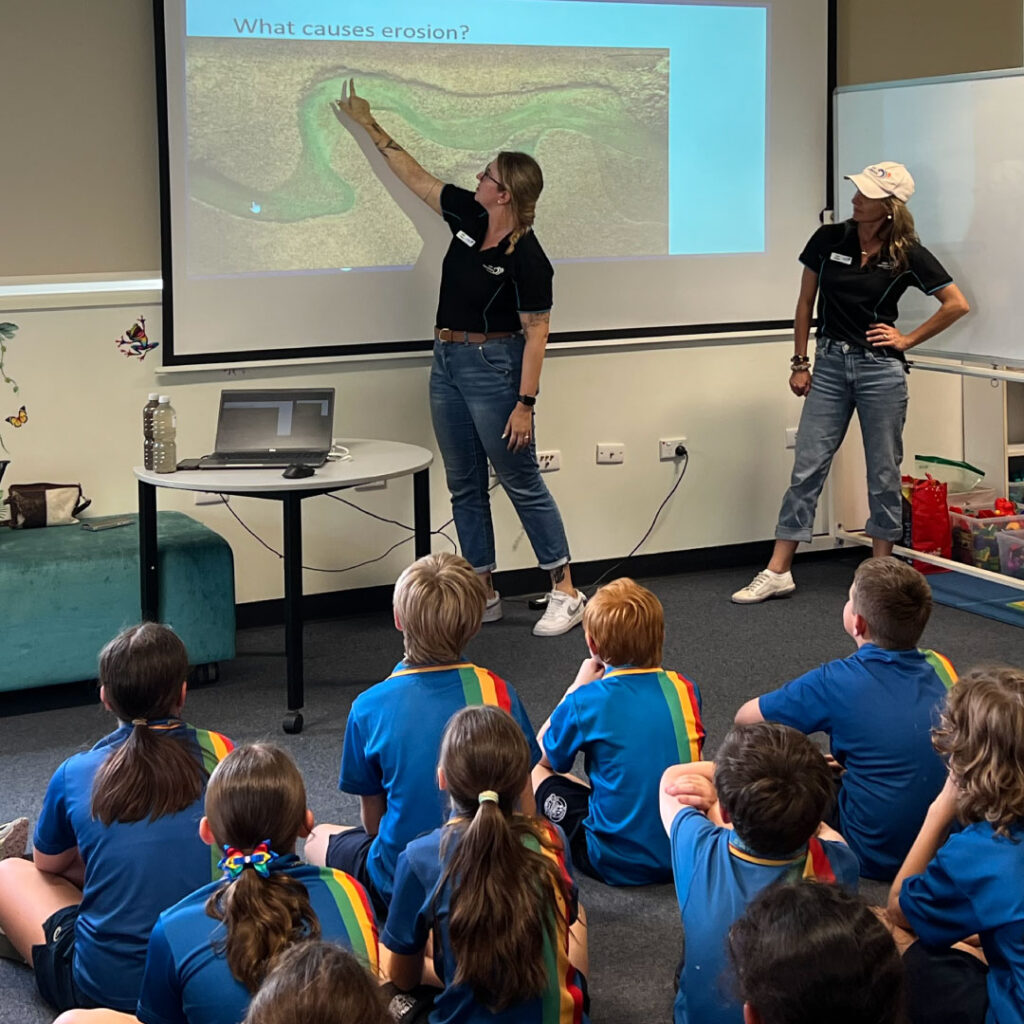
On Tuesday 27th May, Liana and Alyce from the Waterways Team at Reef Catchments had the pleasure of visiting Mirani State Primary School to deliver an engaging and educational presentation to 95 enthusiastic Year 5 and 6 students.

The session focused on erosion and its impact on land, water quality, and the Great Barrier Reef. Students learnt what erosion is, how it forms and why it matters including its links to land loss, water pollution, and reef health. The session also explored how we can both fix and prevent it through sustainable land practices.

Explaining erosion to students
Reef Catchments learning materials

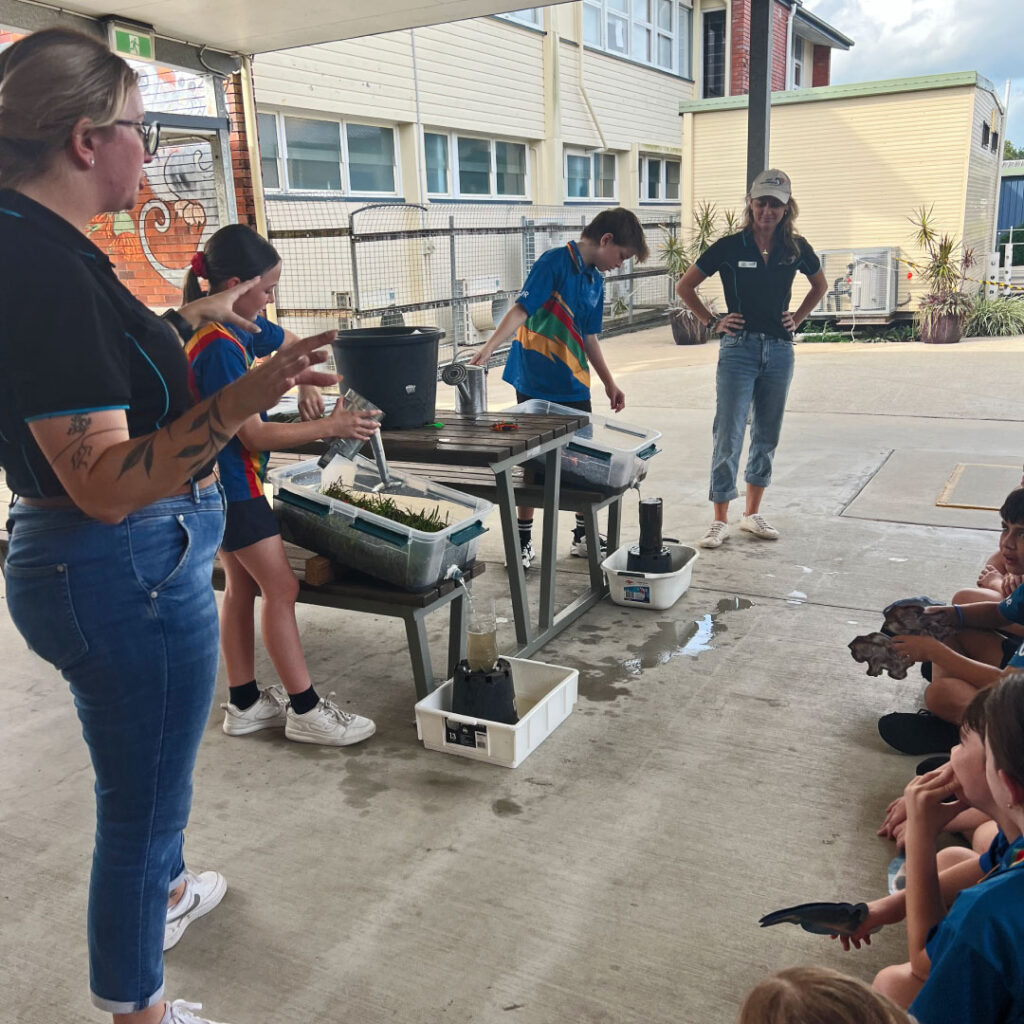
A highlight of the session was the interactive demonstration, featuring toy animals and marine creatures, which helped students visualise how erosion travels from paddocks to the reef, affecting both farmers and marine ecosystems. The use of local examples made the learning experience relatable and impactful, with students particularly enjoying the real-life context and participation.

Our key message was clear: Rebuild, revegetate, and support sustainable practices — because the health of our land directly influences one of the seven natural wonders of the world, our Great Barrier Reef.

Setting up a demonstration
Demonstration of water flowing from paddock to reef

Resilient Catchments Register

Share your knowledge. Register your idea. Shape the future of our land, sea and waterways.

Register now

Get to know us better

You’ll receive our monthly newsletter containing updates on events and workshops, community activities and information about how our projects are helping our regional environment and communities.

  • This field is for validation purposes and should be left unchanged.

© 2026 Reef Catchments · All rights reserved · Site by the dma

  • Disclaimer
  • Privacy Policy
  • Sitemap
  • Contact
  • Disclaimer
  • Privacy Policy
  • Sitemap
  • Contact
Reef Catchments would like to acknowledge the Traditional Owners, past and present, on whose land, sea and waters we work. We acknowledge their enduring spiritual and cultural connection and their responsibility as First People to maintain and care for Country.
While every effort is made to maintain a culturally respectful resource; Aboriginal and Torres Strait Islander people are advised that this website may contain images, voices and names of people who have passed away.