
Imagine if seaweed, once seen as waste, became the key to cleaner water and a thriving circular economy.
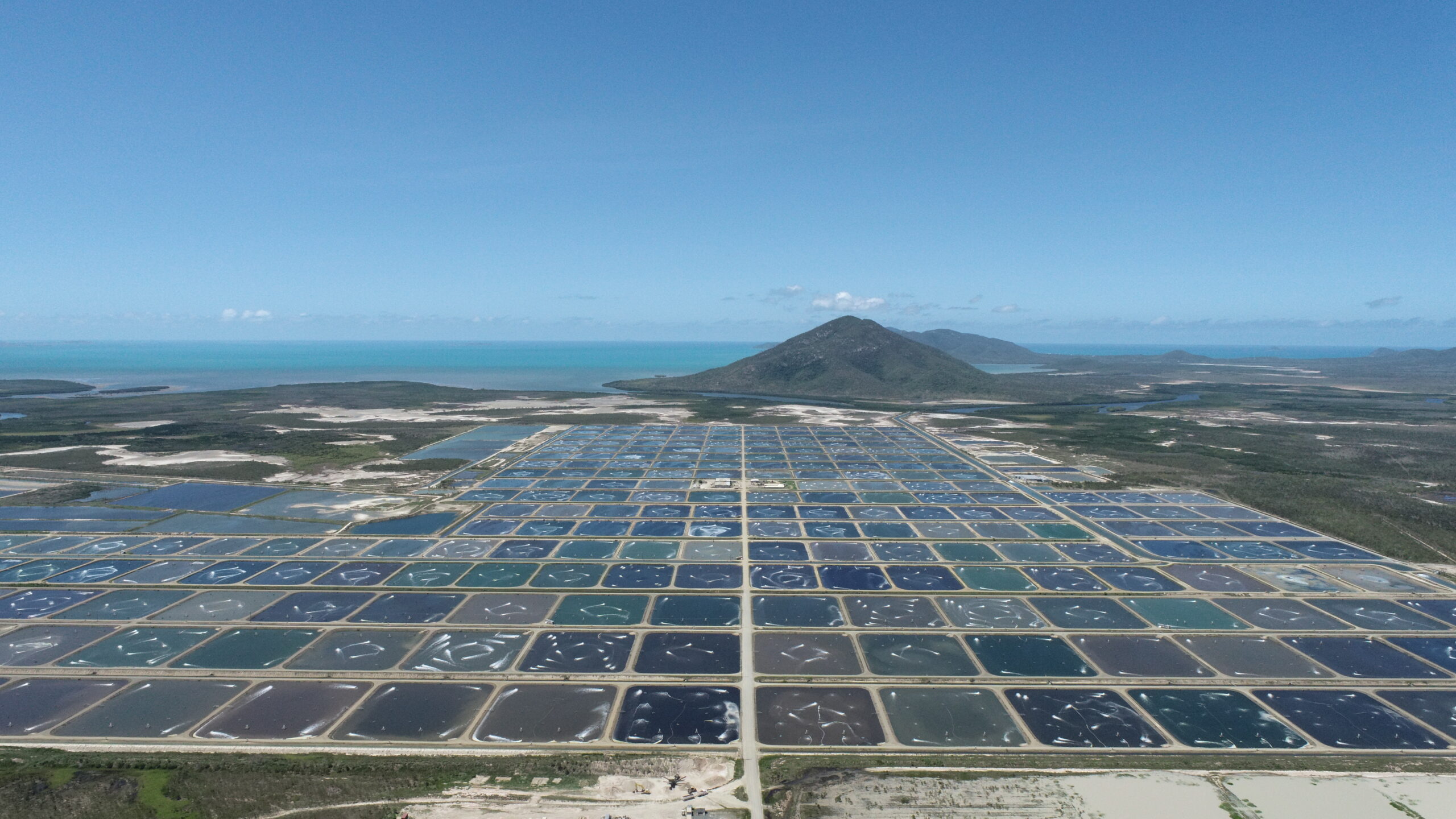
That’s the vision driving Reef Catchments’ innovative Biofiltration Solution project – part of the Proserpine Integrated Project (PIP), delivered in partnership with Tassal and supported through the Queensland Government’s Reef Water Quality Program.
Using Seaweed to Clean Water and Create New Value
At Tassal’s Proserpine Prawn Farm, a groundbreaking trial is underway exploring how green seaweed (Cladophora) can act as a natural biofilter. By absorbing excess nutrients from wastewater, the seaweed helps improve water quality before it reaches local waterways and, ultimately, the Great Barrier Reef.
Early research shows promising potential: the system may remove 7.6 to 11.7 tonnes of dissolved inorganic nitrogen (DIN) each year, positioning seaweed as a powerful nature‑based tool in reducing nutrient loads.
Reef Catchments’ Manager – Sustainable Agriculture, Todd McNeill, says this approach represents a shift in how the aquaculture industry views “waste.”
“This project provides the first step in supporting Research to develop marketable seaweed by-products and explore its potential as a resource for regional circular economy initiatives, strengthening the region’s value chain. Aquaculture seaweed waste presents exciting opportunities to create high-value products – such as animal feed, fertilisers, biochar, bioplastics, and bioactive extracts – turning what was once a by-product into a driver of innovation, sustainability, and new revenue streams”, Todd McNeill explains. “We recognise that while different seaweed species have unique attributes and constraints, these characteristics also offer diverse opportunities for innovation and value creation.”
A Place-based Approach to Innovation
Delivered through a collaborative partnership between Reef Catchments, Tassal and the Queensland University of Technology (QUT), the project aims to build an evidence base to support long‑term growth in seaweed‑based wastewater treatment and product development.
Tassals Senior Technician – Bioremediation, Maddy Smith, says the trial is already delivering valuable insights:
“Partnering on this project allows us to explore how a natural by‑product could become a valuable resource while supporting cleaner water for the Reef. This is the kind of forward‑thinking, science‑led innovation we’re committed to driving across Tassal’s aquaculture operations.”
She explains that while trial is ongoing, the team is learning a great deal about how Cladophora performs in real-world conditions:
“While the trial is still underway, it’s already giving us valuable insights into where seaweed may fit within our broader wastewater treatment approach. We’re assessing how Cladophora performs on site and what that could mean for nutrient management. It’s a promising area of research, and we’ll continue refining and validating results as the project progresses.”
Driving Scalable, Sustainable Change for the Reef and the Region
As the region’s Natural Resource Management (NRM) organisation, Reef Catchments is committed to advancing environmental, social, and economic outcomes through responsible, evidence‑based natural resource management. Through a place‑based research and development approach, the Circular Economy project is laying the groundwork for seaweed farming to become a commercially viable and environmentally sustainable component of Queensland’s aquaculture industry.
Delivered by Reef Catchments and supported by Tassal, this initiative forms part of the $5.5 million Reef Place‑Based Integrated Projects program, funded through the Queensland Government’s Queensland Reef Water Quality Program.
By combining innovative circular economy thinking with sustainable aquaculture practices, the project is helping the sector strengthen its environmental performance while supporting cleaner water for the Great Barrier Reef. The ongoing testing and refinement of wastewater treatment and seaweed production systems are producing practical, scalable solutions with potential application across Australia.
Throughout the project, Reef Catchments and its partners will continue sharing insights including successes, challenges and lessons learned to build a strong evidence base that encourages broader industry adoption. This work is helping drive new opportunities for sustainable aquaculture and circular economy growth across the Mackay–Whitsunday–Isaac region and beyond.