
If you’ve driven into Mackay city along the Bruce Highway recently, you’ve probably admired the blue waters of the Pioneer River.
Look a little closer – to your left. Along sections of the riverbank, you will see a dense forest of invasive species choking native mangroves and saltmarshes, and preventing these important coastal ecosystems from thriving.
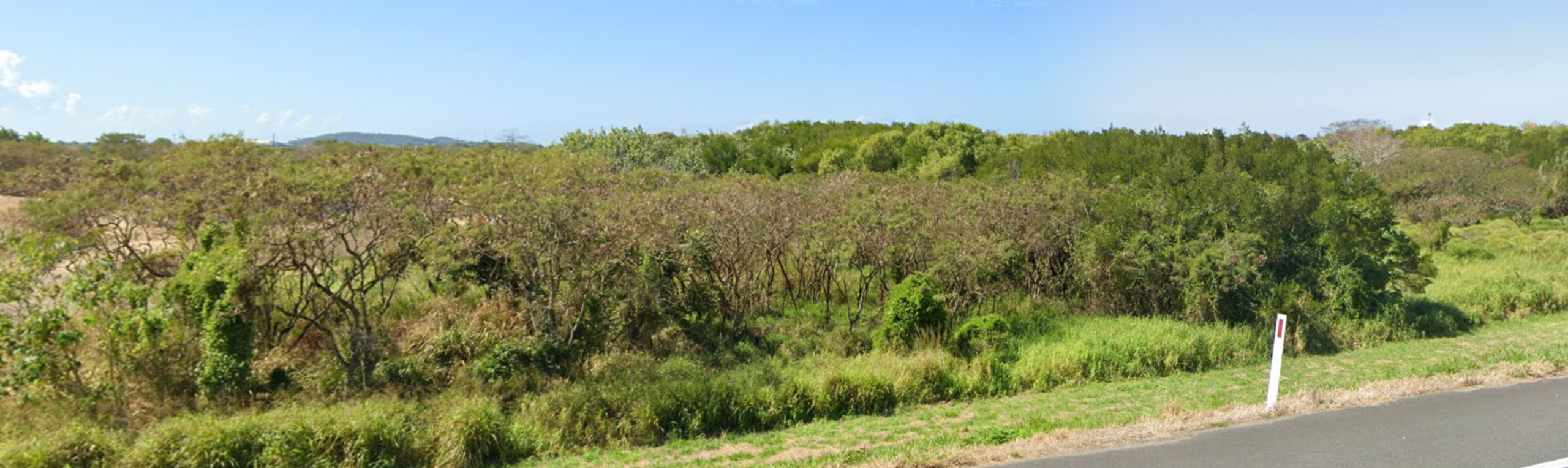
Google maps street view, looking from the highway across the banks of the Pioneer.
Reef Catchment’s Great Barrier Reef team has begun weed control works along the Pioneer River, targeting Singapore daisy, Leucaena and Guinea grass. These invasive species outcompete native vegetation, degrade habitat and limit the natural regeneration of important native species, such as the river mangrove.
“Coastal habitats are in trouble from both sides,” says Reef Catchments Great Barrier Reef Manager, Cass Hayward.
“Rising sea levels push in from the coast, and development and agriculture press out from the land. This phenomenon is called coastal squeeze. Here at the Pioneer River, we can ease the pressure by removing weed barriers, allowing the saltmarsh and mangroves room to spread, recover and breathe again.”
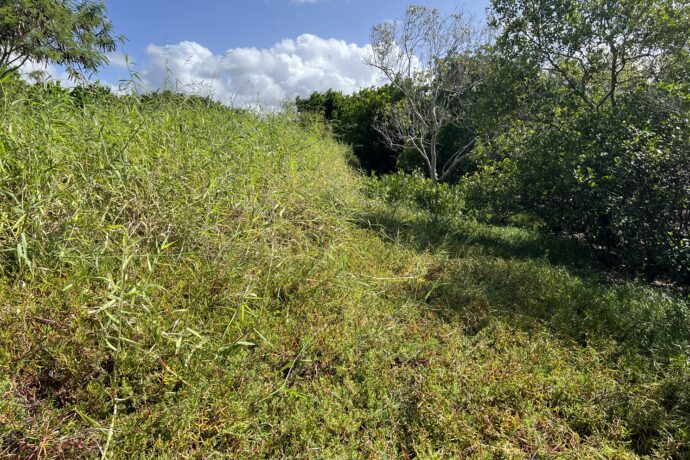
Just weeks into the works, the difference is already visible. What was once a blanket of weeds is beginning to reveal the native ecosystem underneath, with juvenile mangroves and saltmarsh plants uncovered in areas that had been smothered by weeds for years.
Since June, contractors Ranges to Reef Environmental Services, have been carrying out the initial knockdown of these target species. Guinea grass infestations have been slashed, Leucaena trees have been drilled and treated with chemical, and Singapore daisy has been removed by hand from the site.
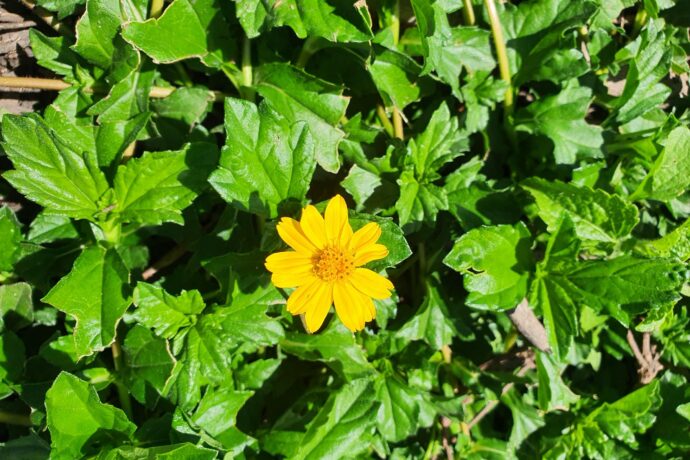
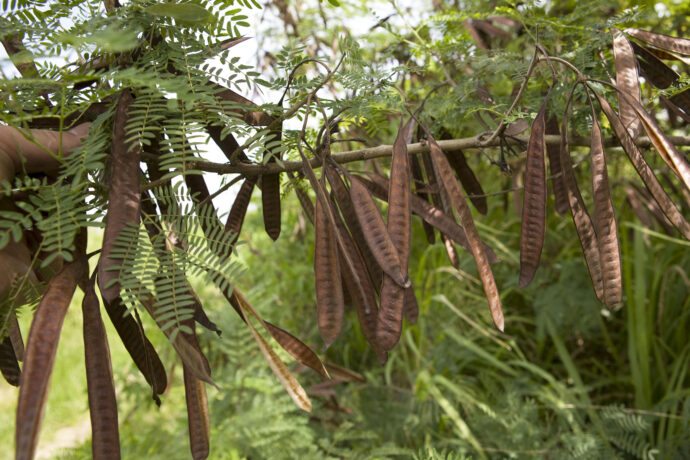
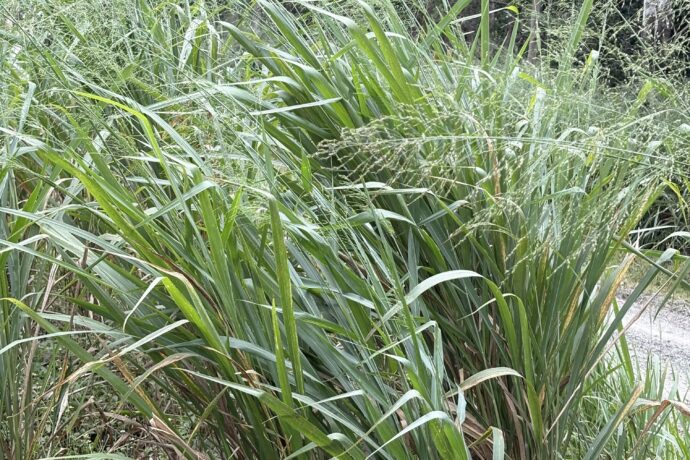
But there is something new and exciting about the approach: We are being assisted by a robot!
A key factor in the success of the project has been the use of new technology: a hybrid remote-controlled vegetation mower capable of operating on slopes of up to 50 degrees. This technology has allowed contractors to safely and effectively access challenging areas while minimising disturbance to the surrounding saltmarsh environment.
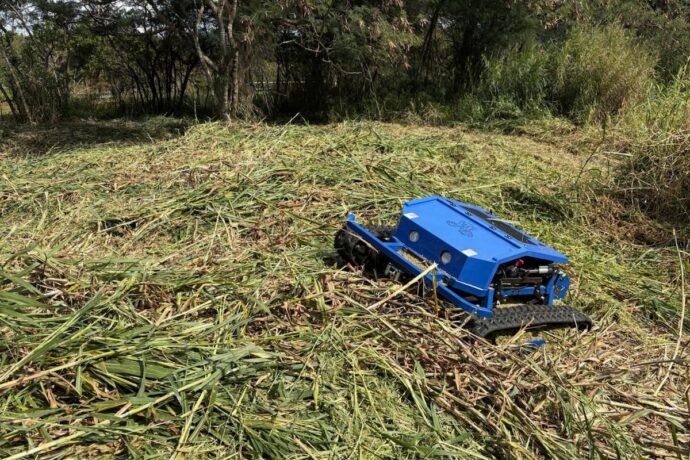
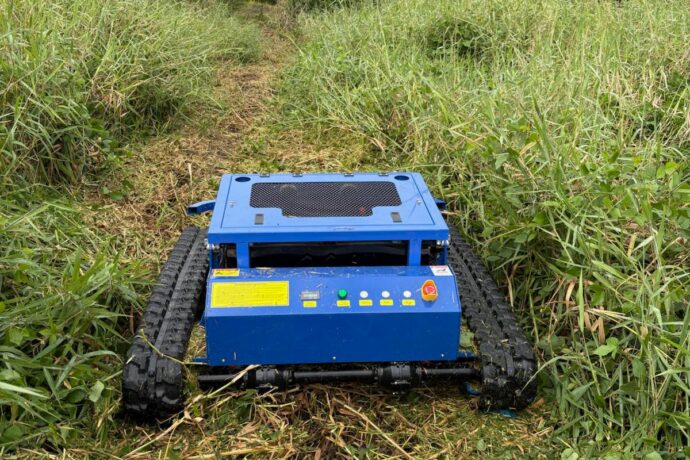
The results have been remarkable. In fact, Ranges to Reef estimate that what would have taken multiple days of staff time, took six hours with the robot.
“Our remote mower does the work of 10 people on brushcutters and can manoeuvre through tight vegetation and work on slopes of up to 45 degrees” says Ranges to Reef Environmental Services’ Alf Vary.
Importantly, the time saved from this approach has allowed crews to focus on the detailed restoration work that machines can’t do. Instead of spending days tackling dense Guinea grass infestations, staff have been able to invest more time hand-weeding around native mangroves and saltmarsh, reducing non-target impacts and improving restoration outcomes.
The transformation following initial weed control has been significant. We can already see the native species beneath, including juvenile mangroves that were previously struggling to grow under thick mats of Guinea grass.
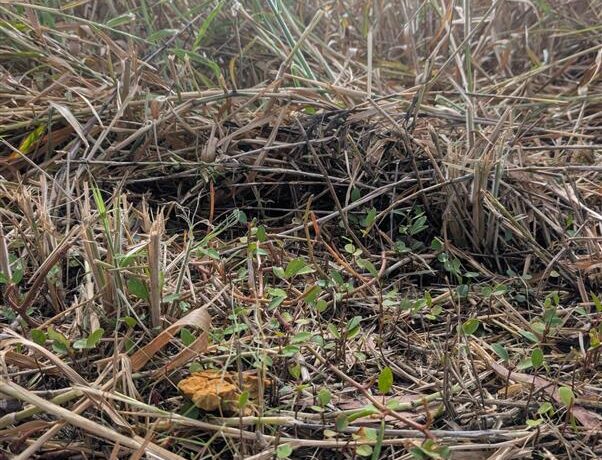
While the initial weed knockdown marks a significant milestone, it is only the beginning of our work at the Pioneer River site. Reef Catchments will continue weed management, revegetation works and maintenance at the site for at least 12 months to support long-term recovery and reduce the likelihood of weeds returning.
See pictures before and after the initial weed knockdown efforts!
By combining innovative technology with targeted ecological restoration, the Inshore Resilience Project is accelerating recovery of the Pioneer River’s coastal wetlands, helping native mangroves and saltmarsh reclaim areas previously dominated by invasive weeds. Our impact will be measured through vegetation condition assessments, or ‘VegCATs’ and we look forward to quantifying the outcomes of this work.
This work is part of the Inshore Resilience project, delivered by Reef Catchments in partnership with Earthwatch. The Inshore Resilience project is funded through the Queensland Government’s Natural Resource Management Expansion Program.
