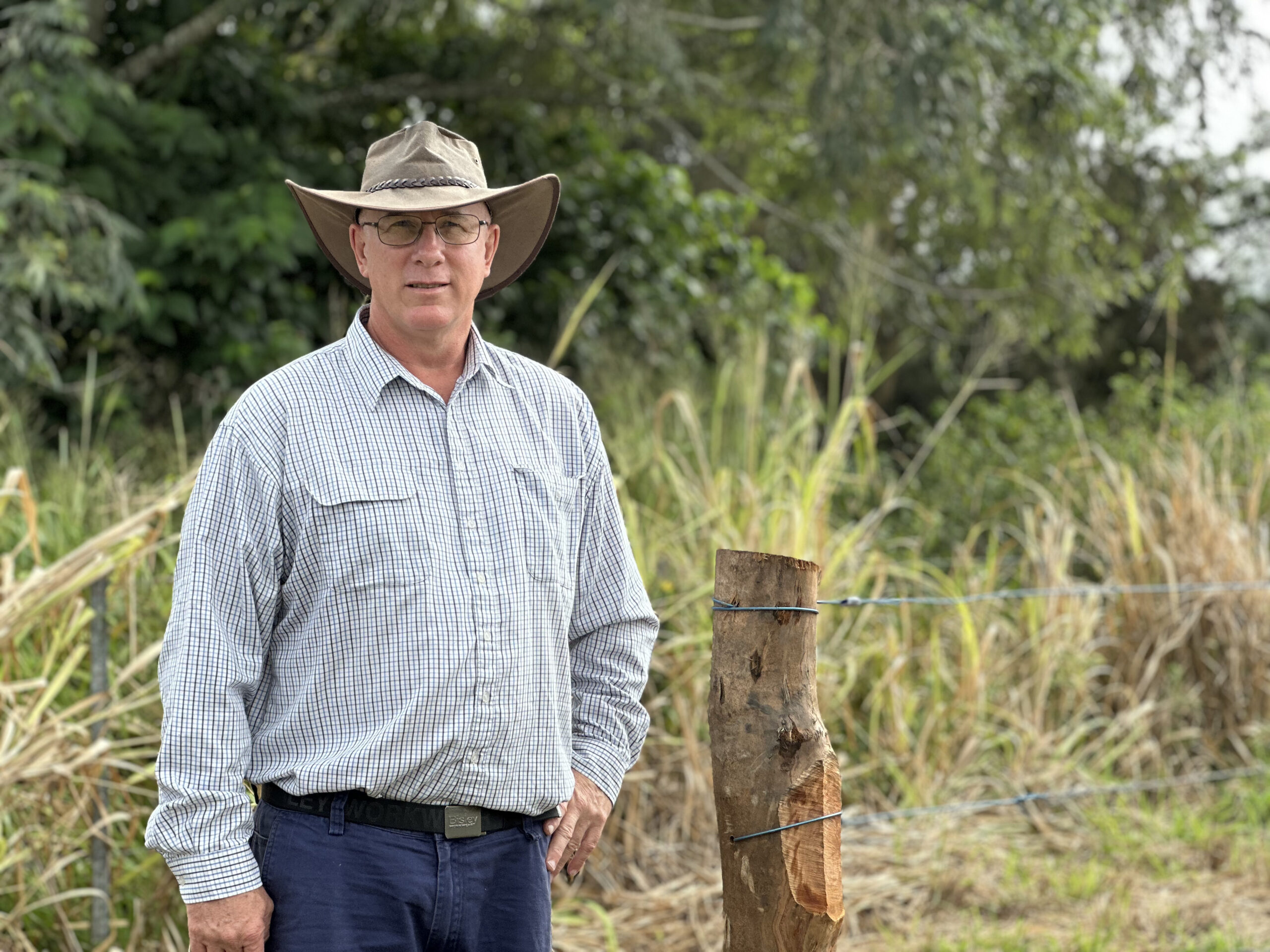
Landholder: Ross Bailey
Project: Continuing the path to nature-based solutions
Location: Sarina
Area: 265 acres of grazing land
A tour of Ross and Angela Bailey’s property quickly revealed the results of years of care and improvement. With pride, Ross pointed out strategic improvements that have strengthened the land, supported wildlife, and boosted the success of his cattle operation. From erosion control to wildlife-friendly fencing, his commitment to sustainable property management is evident in every detail, each decision made with the long-term health of the landscape in mind.
Background: From Cane to Cattle, with a Conservation Mindset
The property was once an active cane farm before being transitioned to grazing land. Since purchasing it, Ross has been dedicated to continual improvement. He’s tackled significant weed control, including the clearing of lantana, which not only improves pasture but benefits koala habitat as well.
He has also undertaken pasture renovation and refined fencing layouts to balance production with environmental care.
The Challenge: Fragile Streambanks and Erosion from Cattle Access
Ross Bailey’s property, once a sugarcane farm, presented unique challenges when converted to a cattle operation. The legacy of cane farming left fences placed in gullies, areas once used to allow harvesters and haulers to turn around, which were now high-traffic zones for cattle.
Already fragile, these gullies became increasingly eroded due to repeated cattle movement, causing the loss of vegetation and sediment run-off into nearby waterways. Without the stabilising presence of vegetation, streambanks were left vulnerable.
Cattle access to the creek further exacerbated the problem, leading to degradation of both soil health and water quality.
The Solution: A Holistic and Strategic Fencing Approach
Through a recent grant-supported fencing project, Continuing the Path to Regional Resilience, Ross installed 2.4 km of new fencing to restrict cattle access to the creek and protect the vulnerable banks.
Ross says, “fencing is not just for keeping cattle out but a strategic tool to improve land and livestock management as a whole.”
The key to Ross’s solution was relocating old fence lines and gates out of the gullies to higher ground, reducing cattle traffic through these erosion-prone areas. This smart repositioning helps prevent the development of deeper gullies and limits sediment runoff into the waterway.
The fencing design is not only strategic but also wildlife-conscious: a plain top wire ensures wildlife, including native species, can safely navigate the landscape without the risk of injury.
The Results: Healthier Land, Livestock, and Ecosystems
Ross has implemented a wagon-wheel or rotational grazing approach, where cattle are moved systematically between paddocks. This practice gives pastures time to recover, encouraging regrowth, soil health, and water retention while reducing overgrazing and further erosion.
Benefits already observed include:
- Improved pasture quality and soil condition
- Fatter, healthier cattle due to better pasture availability
- Reduced erosion and sediment loss
- Safer passage for wildlife across the property
Ross’s attention to small details, such as preventing cattle from using the same track repeatedly, demonstrates his commitment to sustainable land management.
Looking Ahead: Custodianship and Conservation
Ross is clear about his role and said, “I’m a custodian of the land and will look after it while I have it.”
Looking ahead, Ross’s focus is on leaving the land in better condition for future generations. Upcoming goals include planting native trees to support koala habitat, in partnership with other Reef Catchments projects like the Sarina Koala Habitat Restoration.
His approach stands as a model for integrating productive agriculture with environmental stewardship, showing that even small changes, like a better-placed gate or a plain top wire, can have a big impact when viewed through a holistic lens.
Assistance provided by the Australian and Queensland Governments under the Queensland Resilience and Risk Reduction Fund. The Sarina Koala Habitat Restoration project is supported by Reef Catchments through funding from the Australian Government’s Saving Koalas Fund.

